


You can boost your dog’s diet with simple, safe vegetables that add vitamins, fiber, and low-calorie treats without replacing balanced pet food. Feeding small amounts of dog-safe veggies like carrots, green beans, peas, and cucumber gives your dog extra nutrients and healthy snacks while keeping treats to a sensible portion of their diet.
This post shows which vegetables help support digestion, weight control, and overall health, how to prepare them safely, and which ones to avoid so you don’t risk harm. Stick around to learn practical tips for serving veggies, plus clear do’s and don’ts that make it easy to add fresh produce to your dog’s meals.
- Why Add Vegetables to Your Dog’s Diet
- Nutritional Benefits of Veggies for Dogs
- Vegetable Variety and Enrichment
- Recommended Amounts and Moderation
- Best Vegetables for Dogs: Top Choices and Health Benefits
- Carrots: Crunchy and Nutrient-Rich
- Green Beans: Low-Calorie Fiber Power
- Sweet Potatoes: Digestive and Immune Support
- Broccoli and Leafy Greens: Antioxidant Boost
- Safe Vegetable Preparation Tips
- How to Prepare Vegetables for Dogs
- Feeding Raw vs. Cooked Veggies
- Serving Sizes and Avoiding Additives
- Vegetables Dogs Should Avoid and Safety Considerations
- Toxic and Unsafe Vegetables
- Watching for Allergies and Sensitivities
- Frequently Asked Questions
- What vegetables are safe for dogs to consume regularly?
- How should vegetables be prepared for canine consumption?
- Which vegetables are considered superfoods for dogs?
- What are the potential risks of feeding dogs fruits and vegetables?
- Are there any vegetables that dogs should avoid completely?
- Can small dog breeds like Shih Tzus eat the same vegetables as larger breeds?
Why Add Vegetables to Your Dog’s Diet

Vegetables can boost vitamins, fiber, and moisture in your dog’s meals. They can also add texture and taste that many dogs enjoy, when you choose safe options and serve them properly.
Nutritional Benefits of Veggies for Dogs
Many vegetables give specific nutrients dogs need. Carrots and sweet potatoes provide beta‑carotene (vitamin A) for eye and skin health. Green beans and peas add fiber and small amounts of protein to help digestion and satiety. Leafy greens like spinach contain vitamins K and C, but only in small amounts because of oxalates.
Vegetables also supply water and low‑calorie volume. Cucumbers and lettuce are mostly water, which helps hydrate dogs without extra calories. Pumpkin and plain canned pumpkin offer soluble fiber that can firm stools or ease constipation. Avoid veggies in the allium family—onions, garlic, leeks, and chives—which can damage red blood cells even in small amounts.
Serve vegetables plain, cooked or raw depending on the type, and remove seeds, pits, and tough stems that could choke or block the gut.
Vegetable Variety and Enrichment
Offering different veggies gives broader nutrients and keeps your dog interested. Rotate safe choices like carrots, green beans, peas, zucchini, and cooked sweet potato. Fresh grocery mushrooms (plain) and small amounts of cooked squash or pumpkin add vitamins and antioxidants.
Use vegetables for enrichment: stuffed Kongs with pureed pumpkin, frozen cucumber slices as a summer treat, or chopped carrots for training. Cut pieces to the right size for your dog’s breed and chewing ability to reduce choking risk. Avoid added salt, oils, herbs, or sauces. Check backyard areas and prevent access to wild mushrooms and any seasoned or cooked dishes that include toxic ingredients.
Recommended Amounts and Moderation
Treats and extras, including vegetables, should make up no more than about 10% of your dog’s daily calories. For a medium dog (around 20–30 lbs), that usually means a few tablespoons to a half‑cup of chopped veggies per day, depending on the vegetable’s calorie and fiber content.
Introduce new veggies slowly over several days and watch for vomiting, diarrhea, or changes in appetite. If your dog has diabetes, kidney disease, or a prescription diet, ask your veterinarian before adding vegetables. Keep portions small, adjust the main food if needed, and stop any veggie that causes digestive upset.
Best Vegetables for Dogs: Top Choices and Health Benefits
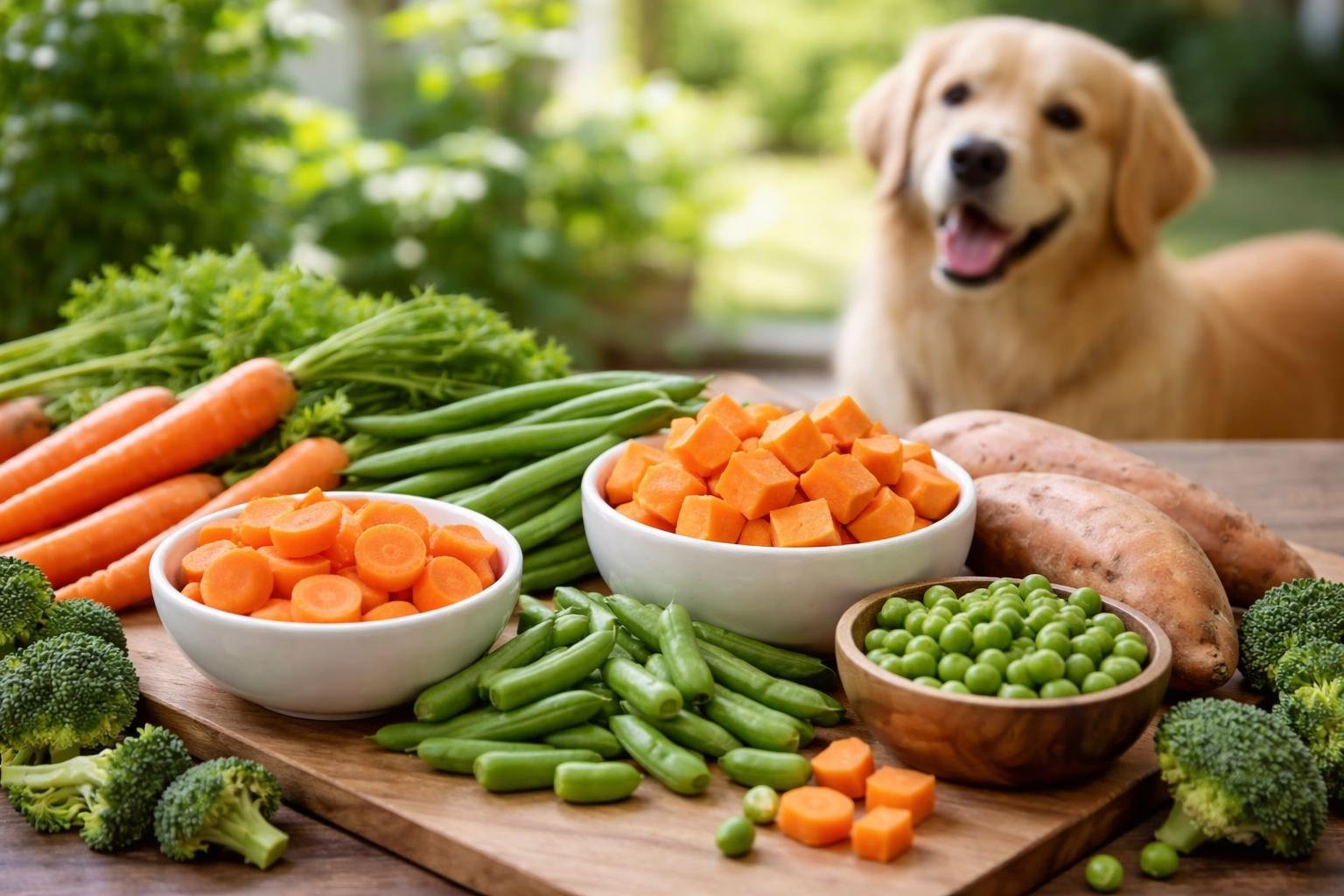
These vegetables add nutrients, fiber, and low-calorie treats to your dog’s diet. Feed them cooked or raw as noted, keep portions small, and avoid any added salt, oil, or seasonings.
Carrots: Crunchy and Nutrient-Rich
Carrots give your dog vitamin A, potassium, and fiber in a low-calorie snack. Raw carrot sticks work well for chewing and dental scraping, while cooked or steamed carrots are easier to digest for small or older dogs. Cut carrots into bite-size pieces to avoid choking, and monitor for any stomach upset when you introduce them.
Use carrots as training treats or mix small pieces into their food. Limit carrot treats to about 10% of daily calories so they don’t unbalance a complete dog food. Avoid glazed or spiced carrot dishes made for humans.
Green Beans: Low-Calorie Fiber Power
Green beans supply fiber, vitamins, and a feeling of fullness without many calories. They suit dogs on a weight plan because you can swap some kibble for plain green beans to reduce overall calories. Offer steamed, boiled, or raw green beans; if using canned, choose no-salt-added varieties and rinse them.
Cut green beans into manageable pieces for small dogs. Start with a few tablespoons per meal and watch stool quality. Green beans also work as a crunchy topper or frozen treat during hot weather.
Sweet Potatoes: Digestive and Immune Support
Sweet potatoes are rich in vitamin A, fiber, and complex carbohydrates. Cook them thoroughly—baked or boiled—and mash or cube before serving. Raw sweet potato is harder to digest and may pose a choking or obstruction risk if swallowed in large chunks.
Add small amounts of plain sweet potato to your dog’s food to help with digestion and coat health. Keep portions controlled because sweet potatoes are calorie-dense. Avoid sweet potato treats that contain added sugar, butter, or spices.
Broccoli and Leafy Greens: Antioxidant Boost
Broccoli offers vitamins K and C and antioxidants, but feed it sparingly to avoid gas or stomach irritation from isothiocyanates. Serve small amounts of cooked or raw broccoli florets, chopped fine for safety. Don’t give large quantities at once.
Leafy greens like spinach and kale add vitamins and minerals, but use caution. Spinach has oxalates that can affect dogs with bladder or kidney issues. Kale is nutritious but can be tough and may cause digestive upset in large amounts. Introduce greens slowly and talk to your vet if your dog has a health condition before adding these regularly.
Safe Vegetable Preparation Tips
Wash, cut, and cook vegetables so your dog can digest them safely. Remove seeds, pits, and tough skins, and serve plain without salt, oils, or seasonings.
How to Prepare Vegetables for Dogs
Always wash vegetables under running water to remove dirt and pesticides. Peel or remove tough skins when they could cause choking or are hard to digest, such as on winter squash or beets.
Cut vegetables into bite-sized pieces that match your dog’s mouth. For small dogs, chop into pea-sized pieces; for large dogs, use 1/2‑inch to 1‑inch pieces. Remove seeds and pits from tomatoes, apples, and squashes before serving.
Use a blender or food processor to puree vegetables if your dog eats slowly, has dental issues, or needs the veggies mixed into kibble. Store cut or cooked vegetables in airtight containers in the fridge for up to 3–4 days.
Feeding Raw vs. Cooked Veggies
Raw vegetables like carrot sticks and cucumber slices make crunchy low-calorie treats. Start with small amounts to check for gas or loose stools, especially with fibrous raw veggies.
Cooked vegetables often digest easier. Steam or boil until tender but not mushy to preserve nutrients. Light steaming softens fibers in sweet potato, green beans, and peas without adding fat.
Avoid frying or roasting with oil and never add butter, salt, garlic, or onion. Certain vegetables—like raw potatoes or large amounts of cruciferous vegetables—can cause digestive upset when raw, so cook them first.
Serving Sizes and Avoiding Additives
Keep vegetables to about 10–20% of daily calories. For a small dog, that’s a tablespoon or two per day. For medium dogs, aim for 1/4 to 1/2 cup; for large dogs, 1/2 to 1 cup depending on activity level.
Never use seasonings, sauces, salt, or oil. These add calories and can upset your dog’s stomach or harm them over time. Plain, unseasoned vegetables are safest.
If you blend vegetables into meals, count those portions toward daily calories. Introduce one new vegetable at a time and monitor for changes in stool, appetite, or behavior for 3–5 days.
Vegetables Dogs Should Avoid and Safety Considerations
Certain vegetables can make your dog sick or cause long-term harm. Know which ones to avoid, how toxins act, and what signs to watch for so you can keep your dog safe.
Toxic and Unsafe Vegetables
Some vegetables contain toxins that harm dogs. Never feed onions, garlic, leeks, chives, or shallots. These Allium-family plants damage red blood cells and can cause weakness, pale gums, rapid breathing, and dark urine. Seek vet care quickly if you suspect ingestion.
Grapes and raisins are fruits but often appear with vegetables in kitchens; they can cause sudden kidney failure and must be avoided entirely. Wild mushrooms also pose a high risk — many species are toxic and hard to identify.
Avoid raw potato leaves and green tomatoes because they contain solanine, which can cause vomiting, drooling, and neurological signs. Also skip avocado (persin) and any vegetables prepared with garlic, onions, butter, salt, or onions in seasoning. When in doubt, choose safe options like cooked carrots, green beans, pumpkin, or plain peas instead.
Watching for Allergies and Sensitivities
Even safe vegetables can cause problems for some dogs. Introduce any new veggie in small amounts—start with a teaspoon for small dogs or a tablespoon for large dogs. Wait 24–48 hours and watch for vomiting, diarrhea, itchy skin, swelling, or wheezing.
If your dog has a sensitive stomach or pancreatitis history, avoid high-fat or high-sugar vegetables like corn or too much mango. Also avoid canned vegetables with added salt or syrup. Keep a food diary of new items and portion sizes; this helps your vet find patterns if issues arise.
If you see persistent vomiting, bloody stools, or breathing trouble after eating a vegetable, call your veterinarian or an emergency clinic immediately.
Frequently Asked Questions
You can add a few safe vegetables to your dog’s meals for extra vitamins, fiber, and low-calorie treats. Prepare them plain, cut small, and introduce each new vegetable slowly so you can watch for digestive changes.
What vegetables are safe for dogs to consume regularly?
Carrots, green beans, peas, and cucumbers are safe to feed often. Sweet potato and pumpkin are also good in small amounts for fiber and vitamins.
Avoid starchy or high-sugar veggies as daily staples; use them as occasional treats. Keep total treats under about 10% of your dog’s daily calories.
How should vegetables be prepared for canine consumption?
Wash and peel when needed, then cut into bite-size pieces. Steam, boil, or roast without oil, salt, or seasonings.
Cool cooked veggies to room temperature before serving. Raw veggies like carrots and cucumber are fine if cut small to prevent choking.
Which vegetables are considered superfoods for dogs?
Pumpkin helps with digestion and stool firming. Sweet potato supplies vitamin A and fiber.
Broccoli and bell peppers add vitamins and antioxidants but offer them in small amounts to avoid gas. Green beans are low-calorie and good for weight control.
What are the potential risks of feeding dogs fruits and vegetables?
Too much fiber can cause diarrhea or stomach upset. Some vegetables cause gas or bloating, especially cruciferous types like broccoli or cabbage.
Human seasonings, oils, and sauces can harm your dog. Always avoid added salt, garlic, and onions in any form.
Are there any vegetables that dogs should avoid completely?
Onions, garlic, leeks, and shallots (Allium family) can damage red blood cells and should be avoided. Raw or wild mushrooms can be toxic and must be kept away.
Avocado contains persin, which can be harmful in some cases, so skip avocado or ask your vet first.
Can small dog breeds like Shih Tzus eat the same vegetables as larger breeds?
Yes, they can eat the same safe vegetables, but portion size matters. Cut pieces smaller and offer less volume based on body weight.
Introduce new veggies slowly and watch for choking or digestive issues. For medical conditions or special diets, check with your vet first.













Leave a Reply