

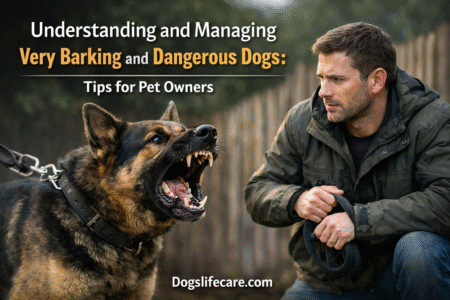
You need clear steps to protect your family and keep your dog safe when barking turns frequent or behavior becomes dangerous. Start by spotting exactly what your dog is doing, why it’s happening, and which actions calm the behavior this lets you choose the right training, management, or expert help quickly.
This article will help you tell serious barking and aggression apart from normal noise, use practical strategies to reduce risk, and decide when to call a trainer or behaviorist. Expect straightforward tips on training, safety tools, and when to seek professional help so you can act with confidence.
- Identifying Problematic Barking and Aggressive Behaviors
- Signs of Excessive Barking
- Types of Barking: Alert, Territorial, and Nuisance
- Distinguishing Aggression from Normal Behavior
- Understanding Why Dogs Bark and Exhibit Dangerous Behaviors
- Common Triggers for Barking
- Motivations Behind Aggressive Actions
- Genetics, Environment, and Breed Tendencies
- Effective Management Strategies for Barking and Aggression
- Behavioral Modification Techniques
- Positive Reinforcement Methods
- Reducing Exposure to Triggers
- Training Solutions and When to Get Help
- Establishing Clear Commands
- Professional Dog Trainer and IAABC Resources
- When to Seek Professional Help
- Tools and Products for Managing Barking
- Choosing Safe and Effective Tools
- Considerations for Spray Collars
- Frequently Asked Questions
- What are effective strategies to curtail a dog’s barking rapidly?
- What triggers a dog to bark excessively at unfamiliar people?
- Can a consistent dog howling be indicative of an underlying issue?
- What steps can owners take to manage a dog’s uncontrollable barking?
- Are there proven training methods to reduce barking in dogs within a 10-day timeframe?
- How should a pet owner safely approach and deal with an aggressive barking dog?
Identifying Problematic Barking and Aggressive Behaviors
You will learn how to spot when barking becomes a real problem and how to tell aggressive acts from normal dog behavior. Look for patterns, triggers, and body signals to decide whether to manage the behavior at home or seek professional help.
Signs of Excessive Barking
Excessive barking happens when your dog vocalizes so often it disrupts daily life. Count how many minutes or episodes your dog barks each hour. Barking for long stretches, at all hours, or in many situations (home, yard, car) suggests it’s excessive.
Note the triggers. If your dog barks at every noise, every passerby, or whenever you leave, the reason is likely attention-seeking, boredom, anxiety, or a learned habit. Also watch for changes: a sudden increase in barking can signal pain or illness.
Record context and timing. A simple log helps you spot patterns and pick training or management steps. If barking risks safety or damages neighbor relations, treat it as urgent.
Types of Barking: Alert, Territorial, and Nuisance
Alert barking warns you about sights or sounds. It’s short, sharp, and stops when you investigate. This type is useful but becomes a problem if your dog never settles after the alert.
Territorial barking defends space—doors, windows, yard. It often includes intense, repetitive barks and a stiff posture. Your dog may growl or lunge at perceived intruders. This is higher risk because it can escalate to aggressive displays if the perceived threat doesn’t leave.
Nuisance barking covers boredom, attention-seeking, or separation distress. It’s often repetitive, high-volume, and happens when you aren’t engaging your dog. Nuisance barking responds best to exercise, enrichment, and consistent training rather than punishment.
Distinguishing Aggression from Normal Behavior
Aggression aims to create distance from a person, object, or animal. Look for growling, snapping, lunging, or fixed staring combined with a stiff body. These signs differ from playful or startled barking.
Normal defensive behavior may include a single bark or warning growl, then retreat. Aggressive behavior repeats and escalates if the trigger stays. Note whether your dog’s actions have caused injury or a clear attempt to bite. That raises the level of concern.
Also assess context and history. A dog that consistently reacts the same way to a trigger shows a pattern you must manage. If you see escalating signals or repeated incidents, consult a behavior professional and use safety tools (leash, confinement, muzzle) while you work on a plan.
Understanding Why Dogs Bark and Exhibit Dangerous Behaviors
You need to know what triggers loud barking and what drives a dog to act aggressively. This helps you choose the right training, safety steps, and when to get professional help.
Common Triggers for Barking
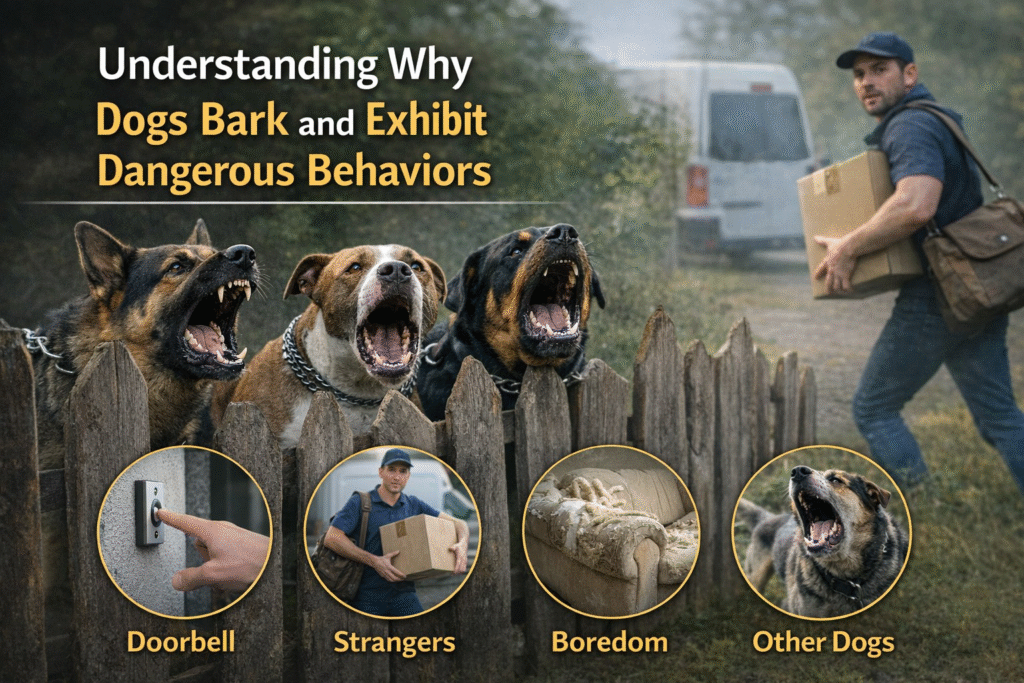
Dogs bark for clear reasons you can observe and change. You’ll hear attention-seeking barking when your dog wants food, play, or to be let outside. If your dog barks every time you pick up your coat or ring the doorbell, they learned that noise gets your attention.
Other triggers include strangers at the door, delivery people, other dogs, and sudden noises like sirens. Boredom and lack of exercise also cause persistent barking. When a dog is left alone, it may bark out of loneliness or frustration. Finally, medical pain or confusion from age can cause new or increased barking, so check health first.
Motivations Behind Aggressive Actions
Aggression usually has a purpose you can identify. Your dog might show fear aggression when cornered or startled. In those moments they try to protect themselves. Resource guarding is another motive: dogs can bite to protect food, toys, or a resting spot.
Territorial or protective aggression happens at the door or yard when your dog sees a perceived intruder. Redirected aggression can occur when a dog is aroused by something they cannot reach, like another dog outside, and then snaps at whoever is near. Some dogs also act aggressively from pain or illness, so if aggression starts suddenly, get a vet check immediately.
Genetics, Environment, and Breed Tendencies
Genes and early life shape your dog’s potential for loud or dangerous behavior. Certain breeds were historically selected for guarding, herding, or protection. That doesn’t mean a breed is automatically dangerous, but some dogs inherit higher alertness or reactivity.
Environment matters a lot. Puppies that lack socialization — meeting people, dogs, and sounds — are more likely to react fearfully as adults. Training style also affects outcomes: inconsistent rules or harsh punishment can increase anxiety and reactive behavior. Finally, chronic stress from poor housing, isolation, or inadequate exercise raises the chance of both nonstop barking and aggression. Addressing environment and training reduces risk even when genetic tendencies exist.
Effective Management Strategies for Barking and Aggression
You can reduce barking and aggression by changing how your dog feels about triggers, rewarding calm choices, and limiting unsafe exposures. Use clear steps you can repeat every day and measure progress with short training sessions and notes.
Behavioral Modification Techniques
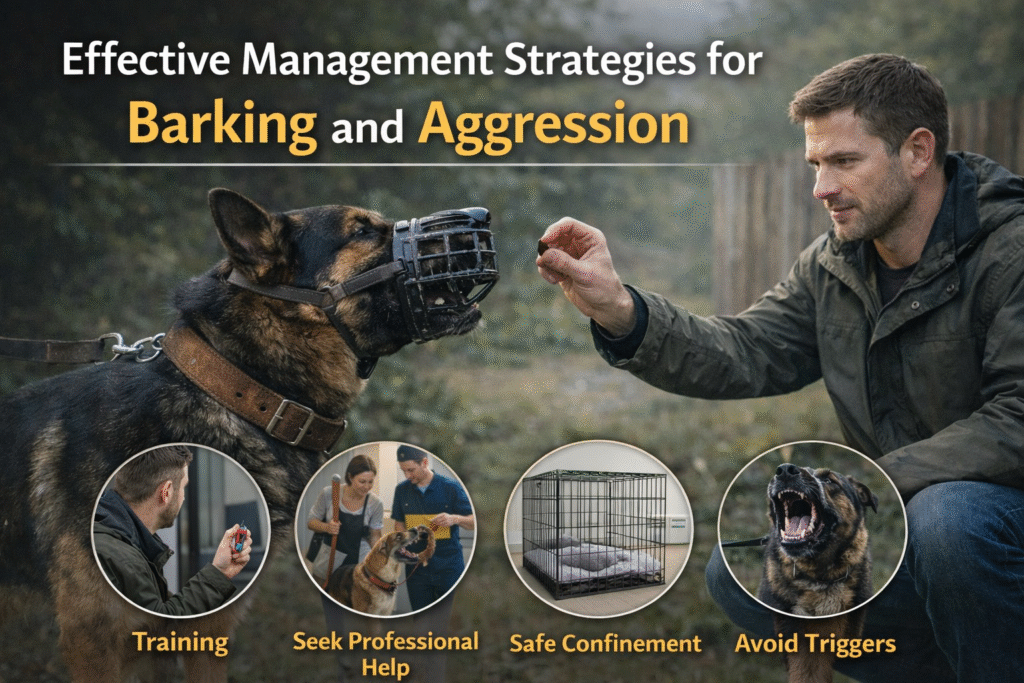
Use desensitization and counter‑conditioning to change your dog’s emotional response to triggers. Start at a distance where your dog stays calm. Present the trigger at that distance and give a high‑value treat the moment your dog looks away or relaxes. Gradually decrease distance over days or weeks as your dog shows no stress.
Practice short sessions (3–5 minutes) several times a day. Keep a log of trigger type, distance, your dog’s response, and treats used. Use “sniff walks” to build confidence; allow relaxed nose work away from stressors so your dog learns calm exploration is safe. If your dog snaps or lunges, increase distance and return to easier steps.
Never force close contact with a trigger. If progress stalls, get help from a certified trainer or veterinary behaviorist who uses reward‑based methods.
Positive Reinforcement Methods
Reward quiet behavior immediately so your dog links silence with good outcomes. Use small, high‑value treats and praise the instant your dog stops barking or offers a calm posture. Mark the moment with a clicker or word like “yes,” then give the treat.
Teach an alternate behavior such as “go to mat” or “look at me.” Train the cue separately in low‑distraction settings, then use it near triggers. Reward the quiet choice repeatedly so it becomes automatic. During walks, give treats when your dog sniffs calmly instead of lunging; schedule dedicated sniff walks to satisfy scent drive and reduce reactive energy.
Avoid punishment. It can increase fear and make aggression worse. Consistency is key: reward the same calm actions each time and fade treats slowly into intermittent rewards and praise.
Reducing Exposure to Triggers
Change your dog’s environment to cut down risky encounters. Identify common triggers—delivery people, other dogs, doorbells—and list safe distances or times to walk. Use routes with fewer dogs, or walk when parks are quieter.
Create physical barriers at home: curtains to block sightlines, baby gates, or crates for safe retreats. Put your dog in a secure room before visitors arrive, and practice controlled greetings where visitors toss treats from a distance.
Set up predictable routines around trigger times. Before mail delivery or garbage pickup, give a focused training session or a calm sniff walk so your dog is mentally settled. For unavoidable triggers, use two‑person management: one person handles the door while the other rewards the dog for calm behavior.
Training Solutions and When to Get Help
You can teach safer behavior with clear cues, consistent practice, and the right support. Start with short training sessions, track progress, and know when to call a professional for safety or complex behavior issues.
Establishing Clear Commands
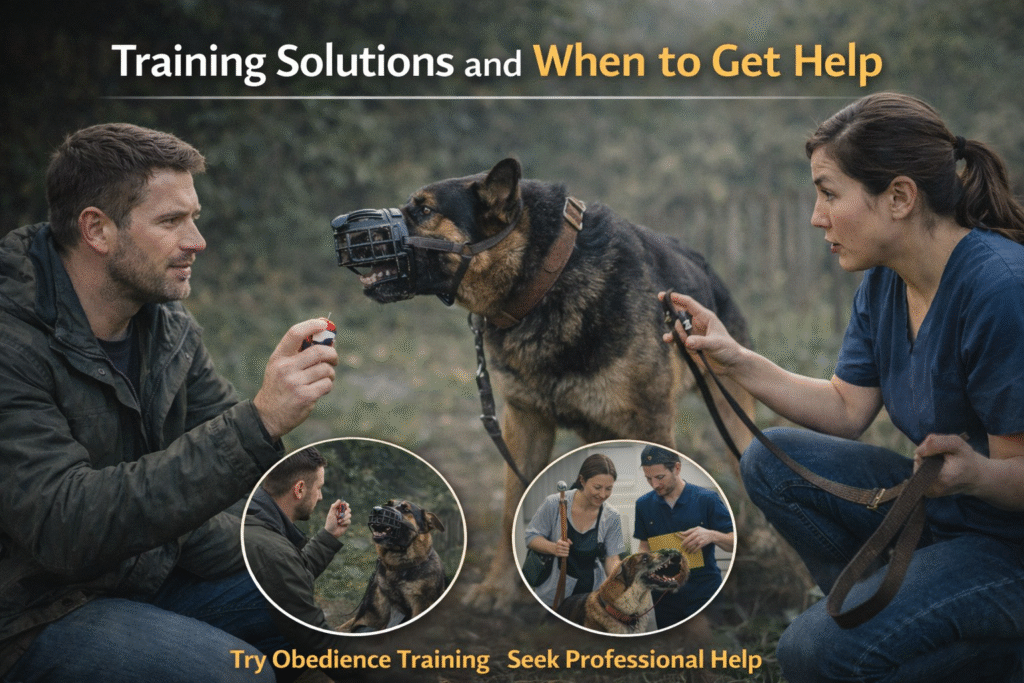
Pick three simple cues to start: a recall (e.g., “come”), a quiet cue (e.g., “quiet”), and a place cue (e.g., “bed” or “place”). Use the same word, the same tone, and reward the exact behavior you want. Reward with high-value treats or a favorite toy the moment your dog complies.
Train in low-distraction settings first, then add distractions gradually. Keep sessions 5–10 minutes, two to three times a day. If your dog barks, wait for a brief pause and mark that pause with a treat or a clicker before saying the cue. This teaches silence instead of punishing noise.
Record short videos of practice sessions so you can see where your timing or rewards break down. Consistency across all family members matters: create a simple one-page list of cues and rewards for everyone.
Professional Dog Trainer and IAABC Resources
Look for trainers who use force-free, reward-based methods and who list IAABC (International Association of Animal Behavior Consultants) certification or other professional credentials. IAABC members include certified behavior consultants who handle aggression, fear, and complex barking problems.
Before hiring, ask for references, proof of certification, and a clear plan that includes evaluation, goals, timelines, and safety measures. Ask whether the trainer will work with you on management (crates, gates, muzzles) as well as training. Expect an initial assessment and written safety plan for dogs that show dangerous behavior.
Use IAABC’s directory and local certified trainers to find someone experienced with reactive or dangerous dogs. If a trainer suggests aversive tools, ask for alternatives and a rationale in writing.
When to Seek Professional Help
Seek professional help immediately if your dog bites, lunges with intent to harm, or shows sudden intense aggression. Also get help if training stalls after consistent effort for several weeks or if the dog’s behavior poses a safety risk to people, other pets, or itself.
Bring video of the behavior, a timeline of incidents, and details about triggers, routines, and medical history to the first appointment. A qualified professional will rule out medical causes, design a behavior modification plan, and give you clear safety steps to follow.
If you feel unsafe handling the dog, do not delay—call a certified behavior consultant or veterinarian behaviorist and use management tools (muzzle, secure confinement) until a plan is in place.
Tools and Products for Managing Barking
You will find tools that help interrupt or deter barking, and choices should match your dog’s size, cause of barking, and your training plan. Pick devices you can pair with positive training and use only after ruling out medical or anxiety causes.
Choosing Safe and Effective Tools
Look for devices with clear operating modes and adjustable sensitivity. Handheld ultrasonic units, citronella sprayers, and vibration-only collars work well for many dogs. Check that an ultrasonic unit lists range (feet) and is designed to target a single dog—not every dog in the neighborhood.
Choose collars and devices labeled “no shock” or with vibration/tone-only settings if you want gentler options. Read product safety tests, battery life, and waterproof ratings. Match device size and weight to your dog: small dogs need lightweight collars and lower-intensity settings. Use devices alongside training: cue the dog, reward quiet, and retire the tool as the behavior improves.
Considerations for Spray Collars
Spray collars release a short burst of citronella or air when the dog barks. They can break a barking cycle quickly, but you must use them carefully. Confirm the spray is pet-safe and that the collar’s spray direction clears fur to reach the nose area; otherwise it may not work.
Monitor for adverse reactions like sneezing, coughing, or avoidance of the collar. Never use spray collars on puppies under the manufacturer’s age limit or on dogs with respiratory issues. Test sensitivity settings so the collar responds to your dog’s own barks, not distant dogs. Pair the collar with training that rewards silence so the dog learns an alternative behavior rather than relying on the spray alone.
Frequently Asked Questions
You will find clear, practical steps to stop or reduce barking, reasons why dogs react to strangers, signs that howling may mean a problem, and safe ways to handle aggressive barkers. Each answer lists actions you can take at home and when to seek professional help.
What are effective strategies to curtail a dog’s barking rapidly?
Start by removing the immediate trigger when possible: close blinds, move your dog out of the yard, or use white noise to mask sounds. Give a clear alternative behavior like “place” on a mat and reward five seconds of quiet right away.
Use short training sessions of 3–5 minutes, several times a day, to teach “quiet” by waiting for silence and rewarding it. Combine this with more exercise and mental work—sniff walks, puzzle toys, or a 20–30 minute play session—to reduce excess energy that fuels barking.
If barking spikes when you’re away, set up remote rewarding (treat dispenser) and keep your dog inside with safe chews. If nothing helps in a week, consult a certified trainer or your veterinarian to check for anxiety or pain.
What triggers a dog to bark excessively at unfamiliar people?
Dogs often bark at strangers because of fear, territorial instinct, or excitement. Visual stimuli—people walking by a window, delivery workers at the door, or groups near the fence—are common triggers.
Past negative experiences, poor socialization, or certain breeds with guarding instincts increase this reaction. You can reduce triggers by blocking sight lines, using brief desensitization walks near people, and rewarding calm attention to you when strangers appear.
Can a consistent dog howling be indicative of an underlying issue?
Yes. Persistent howling can signal separation anxiety, boredom, loneliness, or pain. Note the context: howling when you leave suggests separation anxiety; howling at night can mean loneliness or disrupted sleep.
Check for medical causes with your vet if howling starts suddenly or comes with other signs like changes in appetite or movement. Add enrichment, predictable routines, and gradual desensitization to leaving to address behavioral causes.
What steps can owners take to manage a dog’s uncontrollable barking?
First, track when and why barking happens—time of day, location, and triggers. Use that log to target training: block triggers, teach an incompatible behavior, and increase daily exercise and mental tasks.
Ignore attention-seeking barking and reinforce quiet moments with treats or praise after 3–5 seconds of silence. Avoid punishment, loud corrections, or aversive devices that can raise stress and make behavior worse. If barking feels out of control after consistent work, hire a positive-reinforcement trainer or seek a vet behaviorist.
Are there proven training methods to reduce barking in dogs within a 10-day timeframe?
You can make noticeable improvements in 10 days using consistent, focused practice, but expect gradual change rather than perfection. Daily short sessions—two to four times per day—using “place,” “watch me,” and rewarding silence will yield visible progress.
Combine training with immediate environmental changes: block views, add white noise, and increase activity. If barking is driven by deep anxiety or medical pain, meaningful change likely takes longer and needs professional help.
How should a pet owner safely approach and deal with an aggressive barking dog?
Keep a safe distance and avoid direct eye contact, which the dog may see as a challenge. Stand sideways, speak in a calm, low voice, and move slowly away if you can.
If you must pass by, carry a leash or object to increase perceived control and offer treats on the ground to shift focus. Do not run or shout; that can escalate aggression. If the dog is yours and shows repeated aggression, get help from a certified behaviorist and consult your vet about medical causes.



















Leave a Reply