
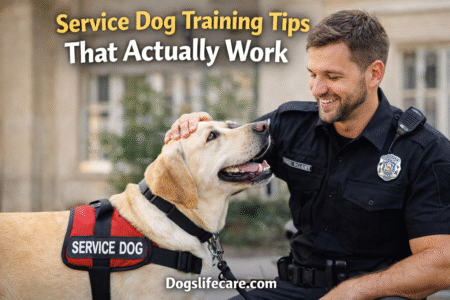
A service dog is more than a pet. It is a working partner trained to perform specific tasks that reduce a person’s disability. That makes it very different from an emotional support dog or therapy dog, which provides comfort but does not perform trained tasks.
Good training supports safety, confidence, and day-to-day independence for the handler. It also takes time, often 18 to 24 months from puppy to finished partner. The good news is that simple, proven methods can help you get better results at every step.
- Start With the Right Dog and Clear Goals
- Choose a service dog candidate that can stay calm and think
- Match your training plan to your real-life needs
- Build Rock-Solid Obedience With Positive Training
- Train Real Service Tasks and Public Manners
- Break service tasks into simple steps your dog can master
- Teach calm, reliable behavior in public places
- Avoid Common Service Dog Training Mistakes
- Do not rush the process or skip socialization
- Stay consistent and ask for expert help when needed
- Conclusion
- FAQs:
- What is the difference between a service dog and an emotional support dog?
- How long does it take to train a service dog?
- How do I choose the right dog for service work?
- What are the first tasks I should train my service dog?
- What is the best way to teach obedience to a service dog?
- How often should I train my service dog?
- How do I train my dog for public settings?
- What are common mistakes in service dog training?
- How should complex service tasks be taught?
- When should I seek professional help?
Start With the Right Dog and Clear Goals
Not every dog is built for service work. The best candidates stay calm around new people and places, handle stress well, and bounce back from surprises. Popular choices like Labradors, Golden Retrievers, and Standard Poodles are common for a reason, as you can see in these popular service dog breeds, but mixed breeds can also succeed.
Before training starts, the handler needs clear goals tied to their disability. That might mean mobility help, medical alerts, or psychiatric tasks. When you know exactly how the dog should help you in daily life, every training session has a purpose instead of guesswork.
Choose a service dog candidate that can stay calm and think
Look for a dog that:
- Stays steady around noise, crowds, and new places
- Enjoys learning and food or toy rewards
- Is neither very shy nor pushy or aggressive
These traits give you a strong base for serious work.
Match your training plan to your real-life needs
Your dog’s tasks must link to your actual needs. Examples include picking up dropped items, guiding to exits, alerting to blood sugar changes, or interrupting panic. Write a simple list of the top three tasks that would help you most. Train those first, then add “nice to have” skills later.
Build Rock-Solid Obedience With Positive Training
Reliable obedience is the foundation for every service dog, from quiet house manners to complex work in public. Proven, reward-based methods, like those explained in Service Dog Training 101, help dogs learn fast and stay eager.
Keep your standards high, but keep your methods fair. Consistent cues, clear rules, and kind feedback turn practice into habit.
Use rewards, not punishment, to teach faster
Positive reinforcement means your dog gets something good after doing the right thing. That might be a small treat, praise, play, or a quick sniff break. Harsh tools, leash pops, or yelling damage trust and can cause fear.
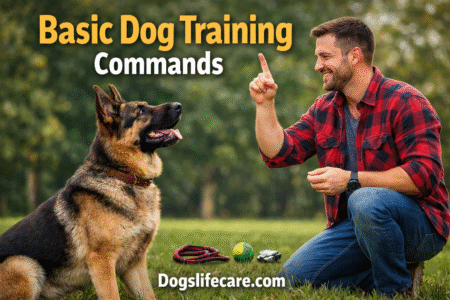
Core obedience skills for service dogs include sit, down, stay, come, heel, and leave it. These skills keep the dog safe and ready to focus.
Practice short, daily sessions that fit real life
Several five to ten minute sessions every day work better than one long drill. Ask every family member to use the same words and rules. Train in different rooms, then in the yard, then on sidewalks.
Add distractions in small steps so your dog can still win. Success builds confidence, and confident dogs perform better in hard situations. For more insights on how dogs detect changes in health, see how dogs can really smell illness and what science actually shows.
Train Real Service Tasks and Public Manners
Once obedience is solid, you can shape true service work. Task training and public manners grow together; both matter.
Short, clear steps help your dog understand complex skills. At the same time, careful practice in stores, streets, and waiting rooms teaches steady behavior around people and noise.
Break service tasks into simple steps your dog can master
Think of a task like item retrieval as a short chain. First, teach the dog to touch the object. Next, pick it up. Then bring it to your hand. Reward every small win.
For an anxiety alert or interrupt, you might reward the dog for noticing early signs, then for nudging you, then for staying close until you recover. Split big goals into tiny pieces so your dog never feels lost.
Teach calm, reliable behavior in public places
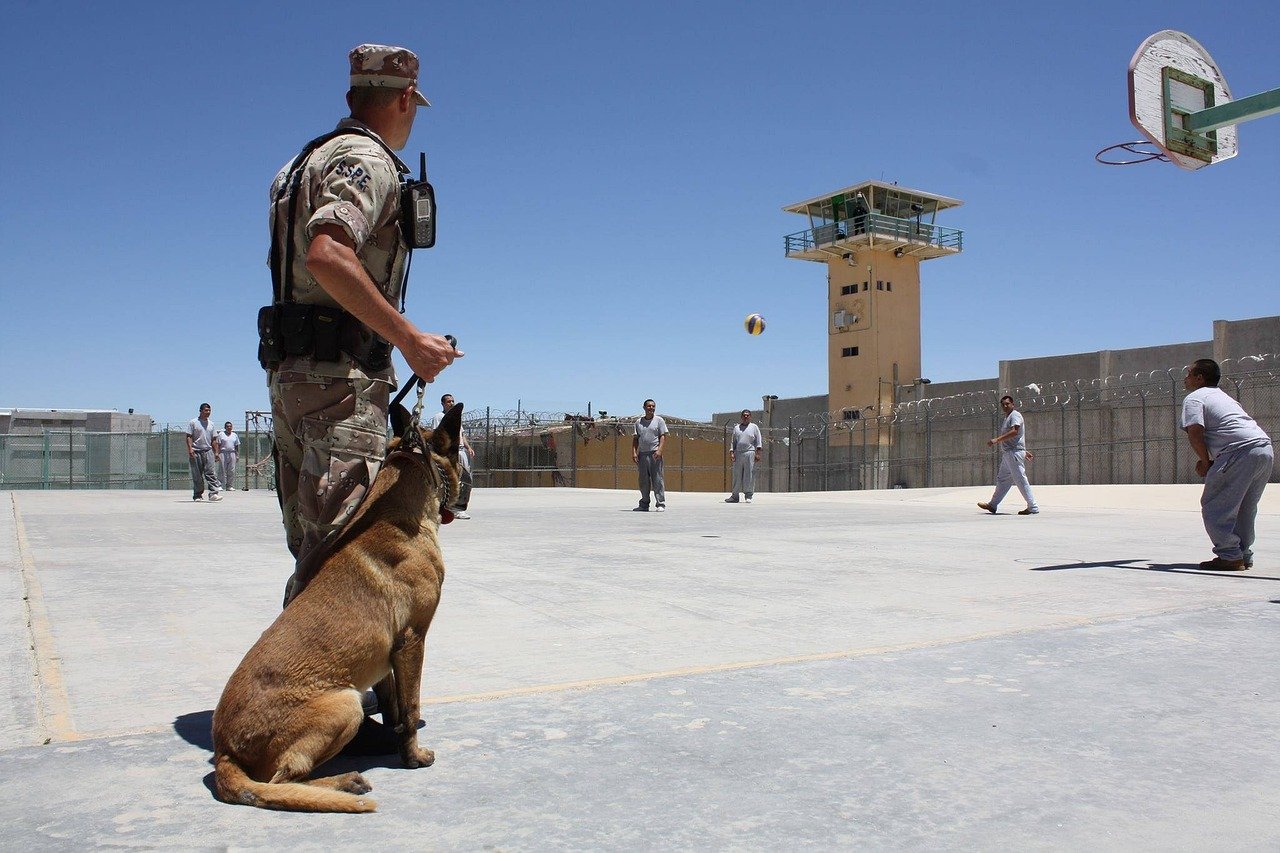
Start in quiet parking lots or empty parks. Move to calm stores, then later to busier areas. Focus on loose-leash walking, ignoring food or trash on the floor, and staying at your side in lines or under tables.
To meet standards often linked to the ADA, a service dog must stay under control, not soil indoors, and not disturb others. Resources like this guide to training your own service dog give helpful checklists for public behavior.
Avoid Common Service Dog Training Mistakes
Many owner-trainers hit the same roadblocks. You can skip a lot of trouble by spotting them early and making simple changes.
Do not rush the process or skip socialization
Pushing a young dog into crowded malls or noisy buses too soon can create fear that is hard to undo. On the other hand, keeping your dog sheltered means they never learn to cope with real life. Aim for steady, age-appropriate exposure to people, sounds, surfaces, and friendly dogs.
Stay consistent and ask for expert help when needed
Mixed cues from different people confuse any dog. Keep cues short and consistent, and follow through every time. If you feel stuck, work with a qualified, force-free trainer who understands service work or contact a local program for guidance.
Conclusion
A successful service dog starts with the right candidate, clear goals, and kind, consistent training. Reward-based obedience, daily practice, and careful socialization create a dog that can handle both tasks and public settings. Break every skill into small steps, and remember that progress over months leads to real safety and independence. If you need extra support, reach out to an experienced trainer or a reputable service dog program so you are not walking this path alone.
FAQs:
What is the difference between a service dog and an emotional support dog?
A service dog is trained to perform specific tasks that help a person with a disability, such as retrieving items or alerting to medical changes. Emotional support dogs provide comfort but do not perform trained tasks.
How long does it take to train a service dog?
Training usually takes 18 to 24 months from puppy to fully trained partner. Consistent, reward-based training throughout this period is essential for success.
How do I choose the right dog for service work?
Look for a dog that stays calm around new people and places, handles stress well, enjoys learning, and is neither overly shy nor aggressive. Popular breeds include Labradors, Golden Retrievers, and Standard Poodles, but mixed breeds can also succeed.
What are the first tasks I should train my service dog?
Start with tasks that address your most important daily needs, such as picking up dropped items, guiding, or alerting to medical issues. Once these are mastered, you can add secondary skills.
What is the best way to teach obedience to a service dog?
Use positive reinforcement, like treats, praise, or play, and maintain consistent cues and rules. Core obedience skills include sit, stay, come, heel, and leave it.
How often should I train my service dog?
Short, daily sessions of five to ten minutes work best. Practice in different rooms, outdoors, and eventually in public spaces with controlled distractions.
How do I train my dog for public settings?
Begin in quiet areas such as empty parks or parking lots. Gradually move to stores, streets, and busier locations while reinforcing calm behavior, loose-leash walking, and staying at your side.
What are common mistakes in service dog training?
Rushing training, skipping socialization, using punishment, and giving inconsistent cues are common mistakes. Steady, age-appropriate exposure and positive reinforcement prevent setbacks.
How should complex service tasks be taught?
Break them into small, manageable steps, rewarding each success. For example, teaching item retrieval involves touching the object, picking it up, and then bringing it to the handler in stages.
When should I seek professional help?
If you encounter challenges, feel stuck, or need guidance, work with a qualified, force-free trainer or a reputable service dog program to ensure proper progress.















Leave a Reply