


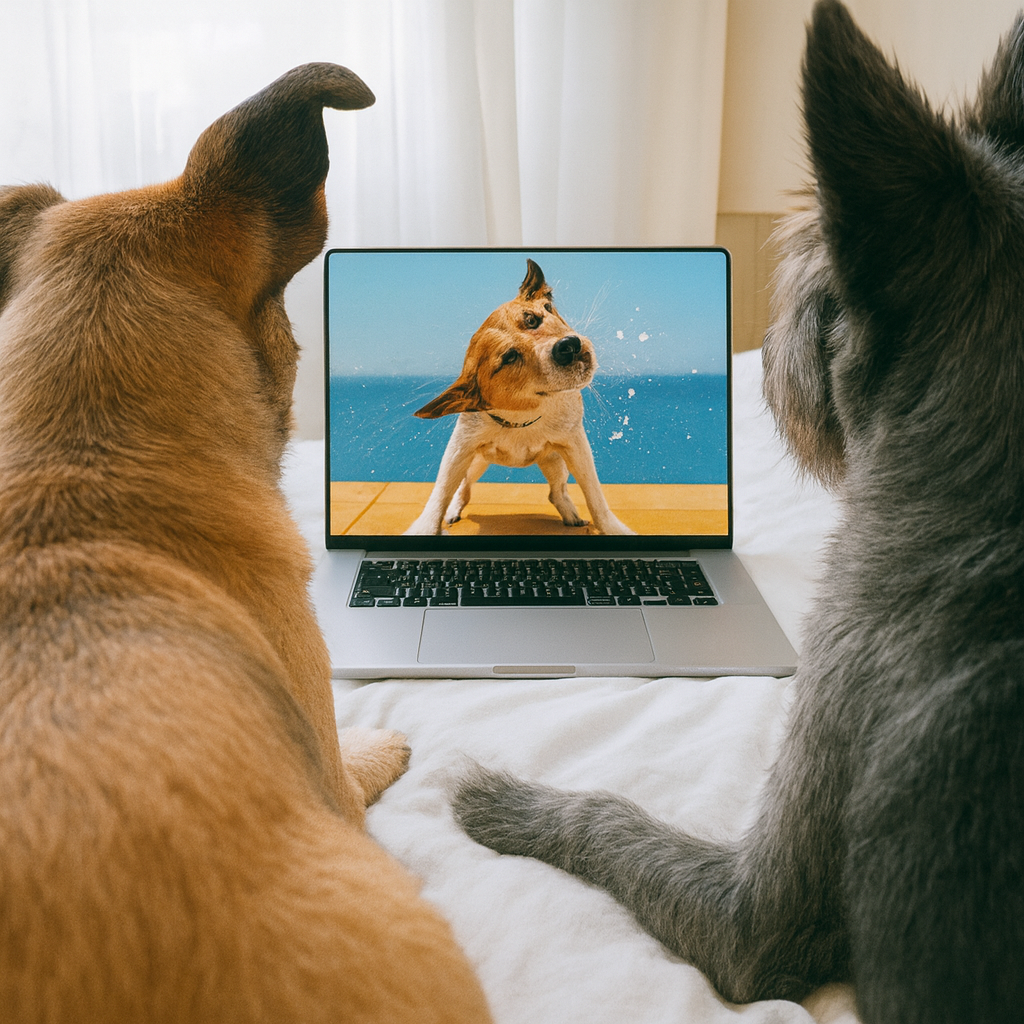
Your dog freezes, ears up, staring at the screen. A squirrel darts across a nature show, and your dog barks, then trots behind the TV to hunt for it. Sound familiar?
Many dogs really do react to TV. They see and hear it, but not the same way you do. Modern flat-screen TVs and what you play on them both change the experience.
By the end, you’ll know what your dog watching TV actually sees, and how to use TV in a safe, fun way.
Key Takeaways:
Dogs really do notice TV, but their experience is different from humans because their eyes detect color and motion in a unique way.
Dogs see blues and yellows clearly, while reds and greens blend into muted tones, which changes how they view scenes on screen.
Motion is what grabs a dog’s attention most, especially fast-moving animals, quick cuts, and action-packed scenes.
Modern flat-screen TVs make a big difference, offering smoother images that look more “real” to dogs compared to old flickering tube TVs.
You can tell your dog is truly watching TV when you see signs like head tilts, tracking movement, perked ears, or barking at screen sounds.
Not all dogs enjoy TV, and that’s normal—age, personality, and sensitivity to noise all influence how interested a dog might be.
Younger and active breeds often watch more, while older dogs may lose interest because of natural changes in eyesight or hearing.
TV can help some dogs relax, offering soft stimulation when they’re home alone or stuck inside during bad weather.
Choosing the right type of content matters, especially calm nature scenes or animal sounds that many dogs respond well to.
TV should support, not replace real activity, so always balance screen time with walks, play, training, and bonding.
What Your Dog Actually Sees When It “Watches” TV
Dog vision basics: colours, detail, and motion
Dogs see color, just not the full rainbow. Their eyes are tuned to blues and yellows, while reds and greens fade into gray or brown. That bright red ball in a cartoon can look more like a dark blob to your dog.
They also see less detail than humans. Faces, small text, and busy backgrounds blur together faster. What stands out is clear movement.
Fast motion on the screen grabs a dog’s attention. Running animals, bouncing balls, and quick camera cuts pop out much more than slow scenes. A calm talk show might be “background noise,” while a wildlife chase feels exciting.
For a simple overview of how this works, a PetMD guide on what dogs see on TV breaks down color and motion in dog vision.
Modern TVs vs old TVs: why dogs notice screens now
Older tube TVs refreshed the picture more slowly. Humans saw a smooth image, but many dogs saw a flicker or blur, like a strobe light. That was not very interesting, and sometimes even annoying.
Modern LED and OLED screens refresh much faster. To dogs, the image now looks smoother and more like real movement.
This is why today’s dogs can track running deer in a documentary or follow a ball in a sports game. The picture finally looks “alive” enough for their sharp motion-sensing eyes.
How You Can Tell If Your Dog Is Really Watching TV
Common signs of real interest in the screen
You can spot real engagement by watching your dog’s body language. Look for:
- Eyes following movement across the screen
- Head tilts when sounds change or animals appear
- Ears perked, body leaning toward the TV
- Barking, whining, or wagging at dogs, birds, or doorbell sounds
- Pawing the screen or trotting behind the TV to “find” the animal
Dogs rarely binge watch. Short, focused bursts of attention count as watching, even if your dog walks away after a few minutes.
Why some dogs love TV and others ignore it
Personality and age matter. Research on TV viewing habits in dogs found that excitable dogs often track moving objects, while anxious or sound-sensitive dogs react more to noises, like cars or doorbells, on the TV. A summary of this work is in Dogs’ TV viewing habits vary by personality.
Younger dogs and active breeds, such as herding or sporting dogs, tend to show more interest. Older dogs may watch less because of normal changes in vision or hearing.
It’s completely normal if your dog ignores TV. That doesn’t mean anything is wrong.
Should You Let Your Dog Watch TV?
When TV can help your dog relax or stay busy
Some owners use calm shows or animal videos as background when a dog is home alone. For certain dogs, this mild sound and motion can reduce boredom.
TV can offer light mental stimulation, like a moving puzzle. It may help a weather-locked dog feel less restless. But it never replaces walks, training, or real play.
If you experiment with TV, notice your dog’s behavior. Do they seem calmer, or more wired and barky? Let that guide you.

Simple guidelines so screen time stays safe and healthy
Keep the volume at a comfortable level, especially for sound-sensitive dogs, and avoid loud action movies if they cause nonstop barking or pacing. Choose shows with natural sounds and animals if your dog enjoys them, as some dogs relax more with gentle, nature-style content. If your dog shows signs of stress—like fixating, lunging at the screen, or becoming overly alert—turn the TV off and shift their focus to a chew, a sniff game, or quiet time. And if you want to understand more about how dogs react to different triggers, this helpful guide on IVDD back pain in dogs from Dog’s Life Care offers valuable insights into canine behavior and comfort:
Conclusion
So, is your dog really watching TV? For many dogs, yes. They pick up simpler colors, follow motion, and react strongly to sound.
Interest in TV depends on age, vision, and personality, and it’s perfectly fine if your dog loves nature shows or ignores them completely.
Next time the screen is on, watch your dog for a moment. Those small head tilts and tail wags are clues to how your dog experiences this strange, glowing box in their world, and they can deepen your understanding of your pet.
FAQs:
1. Can dogs actually see what’s on TV?
Yes. Dogs can see images and motion on modern TVs clearly enough to react, though they view colors and details differently than humans.
2. What colors do dogs see on TV?
Dogs see mainly blues and yellows. Reds and greens appear dull or grayish, which changes how bright objects look to them on screen.
3. Why does my dog bark at animals on TV?
Your dog is responding to movement and sound. Fast-moving animals, squeaks, barks, or doorbells can trigger natural reactions like barking or excitement.
4. Why do some dogs watch TV and others ignore it?
Personality, age, and sensitivity to sound play big roles. Excitable or young dogs tend to watch more, while calm or older dogs may not care about screens.
5. Can TV help keep my dog calm when home alone?
For some dogs, yes. Soft background sounds and gentle movement can reduce boredom. But it shouldn’t replace exercise or human interaction.
6. Is TV bad for dogs?
Not usually. As long as the volume is comfortable and content isn’t overstimulating, TV is harmless in moderation.
7. Do dogs think TV animals are real?
Some do! Many dogs react by barking, tilting their head, or even walking behind the TV to look for the “animal” they saw moving.
8. How long can a dog watch TV safely?
Short bursts are natural. Dogs rarely watch for long periods anyway. Let your dog choose—never force screen time.
9. What types of shows do dogs enjoy most?
Dogs often prefer videos with animals, natural sounds, and quick motion. Calm nature scenes are especially popular for relaxation.
10. How can I tell if TV is stressing my dog?
Watch for signs like pacing, nonstop barking, whining, or lunging at the screen. If you see these, turn the TV off and redirect your dog to something calming.
















Leave a Reply