


You might notice chewing, pacing, or constant barking and wonder if your dog is just being difficult. Those behaviors often mean your dog needs more mental and physical play, not punishment. Simple games, short training sessions, and a few smart toys can cut boredom and stop trouble before it starts.
This post shows how to spot boredom, why mental stimulation matters, and six easy tricks you can use today to keep your dog happy. You’ll also get ideas for outdoor play, ways to add enrichment to daily life, and signs that mean it’s time to ask a professional for help.
- Recognizing Boredom in Dogs
- Common Signs of Boredom
- Behavioral Changes to Watch For
- Comparing Boredom to Other Issues
- Why Mental Stimulation Matters for Dogs
- The Impact of Boredom on Canine Health
- Mental vs. Physical Exercise
- Benefits of Enrichment Activities
- 6 Simple Tricks to Keep Your Dog Entertained
- Interactive Toys and Puzzles
- Training Short New Tricks
- DIY Games and Challenges
- Rotating Your Dog’s Toys
- Outdoor Adventures for Stimulation
- Exploring New Walking Routes
- Organized Playdates
- Safe Off-Leash Play
- Incorporating Enrichment Into Daily Routines
- Mealtime Puzzle Feeders
- Scent Work at Home
- Scheduled Play Sessions
- Understanding Your Dog’s Individual Needs
- Matching Activities to Breed and Age
- Adjusting for Energy Levels
- When to Seek Professional Help
- Frequently Asked Questions
- What are some ways to keep my dog entertained while I’m at work?
- What activities can prevent my dog from feeling bored when alone?
- Can you suggest any homemade brain games for keeping dogs engaged?
- What are some DIY boredom busters I can create for my dog?
- How can I entertain my dog if I don’t have any toys available?
- What indoor activities will keep my dog occupied and prevent boredom?
Recognizing Boredom in Dogs
You can spot boredom by watching your dog’s energy, where they focus it, and how often they repeat certain actions. Look for changes in play, rest, and attention that don’t match their normal routine.
Common Signs of Boredom
Watch for repeated, low-focus behaviors that take up a lot of time. Examples include pacing the same path, sniffing the same spot, or chewing toys in a mindless way. These actions often happen when your dog doesn’t have a goal or new challenge.
Also notice how your dog uses toys. If they ignore toys that usually excite them or push toys around without engaging, that can signal boredom. Excessive barking when no one’s home and digging in the yard without a specific target are other common signs.
Use a short checklist to track patterns:
- Frequency of pacing or circling
- Time spent chewing or destroying items
- Interest level in walks and play sessions
- Amount of attention-seeking behavior indoors
Behavioral Changes to Watch For
Boredom can shift normal habits into problematic ones. If your dog starts chewing furniture, shredding towels, or escaping the yard, boredom is a likely cause. These behaviors often increase when long blocks of the day have no mental or physical activity.
Energy changes matter too. A normally calm dog that suddenly becomes restless at the same time each day may be reacting to lack of stimulation. Conversely, a very active dog that becomes listless can also feel understimulated mentally, even if it rests physically.
Record when behaviors occur. Note the time of day, what you did before, and any recent routine changes. This helps you see links between boredom and specific behaviors.
Comparing Boredom to Other Issues
Not all unwanted behaviors come from boredom. Pain, anxiety, and medical problems can look similar. For instance, whining and reluctance to move might indicate arthritis rather than boredom.
Use these checks to differentiate:
- Pain/injury: sudden change, favoring a limb, yelping when touched
- Anxiety: pacing with trembling, destruction tied to separation
- Boredom: repetitive, goal-less activity that eases with play or training
If a behavior starts suddenly or shows physical signs (limping, loss of appetite), contact your vet. If behavior improves after short training sessions or puzzle toys, boredom is the likely cause.
Why Mental Stimulation Matters for Dogs
Mental stimulation keeps your dog curious, calm, and cooperative. It prevents problem behaviors, sharpens learning, and makes daily training easier.
The Impact of Boredom on Canine Health
Boredom often shows up as chewing, digging, barking, or pacing. These behaviors can damage your home and raise your stress, and they may make your dog more likely to react poorly around guests or other animals.
Long-term under-stimulation can lead to anxiety and withdrawal. Some dogs become clingy and needy; others shut down and lose interest in play. Both patterns reduce quality of life and can mask medical problems that need attention.
You can watch for repeated, intense behaviors after meals, during alone time, or when you prepare to leave. Noticing when and where boredom appears helps you pick the right fixes, like puzzle toys or short training sessions.
Mental vs. Physical Exercise
Physical exercise burns energy with running, walking, or fetch. Mental exercise uses thinking: problem solving, scent work, and learning new cues. Both are necessary, but they do different jobs for your dog.
A tired dog from a long walk can still be restless if their brain is underused. Conversely, a mentally worn dog may stay calm on a short leash walk. Match activities to your dog’s age and breed—herding breeds and scent hounds often need more brain work.
Alternate types of activity across the day: a sniff walk in the morning, a food puzzle mid-day, and a short obedience session before bedtime. This balance lowers unwanted behaviors and improves sleep and focus.
Benefits of Enrichment Activities
Enrichment reduces boredom and builds good habits. Puzzle feeders, treat-dispensing toys, and hide-and-seek with toys teach patience and reduce fast-eating. These tools also slow your dog down and provide reward-based challenge.
Scent games and basic nose work use natural instincts and tire dogs mentally faster than running. Training new tricks strengthens your bond and gives your dog clear rules, which lowers anxiety in new situations.
Rotate toys and change game rules every few days to keep things novel. Simple changes—different treats, new hiding spots, or a shuffled puzzle—make the same activity feel fresh and rewarding.
6 Simple Tricks to Keep Your Dog Entertained
These ideas give your dog physical and mental work, use toys you already own, and fit into short daily routines. Pick two or three that match your dog’s energy and do them regularly.
Interactive Toys and Puzzles
Interactive toys turn feeding or playtime into a game. Use treat-dispensing toys, snuffle mats, or puzzle feeders that make your dog work for kibble. Start with an easy setting so your dog learns success, then increase difficulty every few days.
Rotate types: food puzzles one day, hide treats in a snuffle mat the next. Supervise the first few sessions to check for chewing or choking hazards. Clean toys regularly and remove any damaged parts to keep your dog safe.
Try a short checklist when picking puzzles:
- Size matched to your dog’s mouth
- Stable base to prevent tipping
- Dishwasher- or hand-wash safe
- Made from non-toxic materials
Training Short New Tricks
Short training sessions give mental stimulation and strengthen your bond. Teach one trick at a time for 5–10 minutes, two or three times a day. Use high-value treats and praise for quick wins.
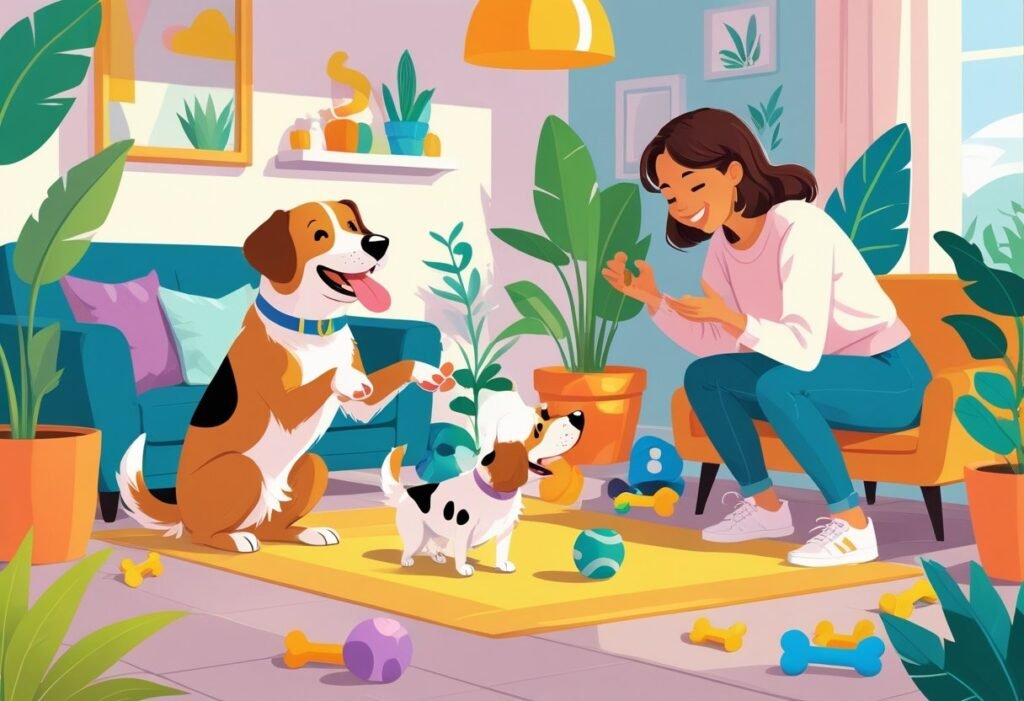
Start with simple tricks: sit, paw, or spin. Once your dog masters one, chain behaviors into a short routine (sit → paw → lie down). Gradually reduce treats and add variable rewards to keep the behavior reliable.
Keep sessions upbeat. End on a success so your dog stays motivated. Use real-life practice (door greetings, leash walks) to reinforce new skills.
DIY Games and Challenges
DIY games cost little and often use things you already have. Hide-and-seek with treats or toys works well: place treats under cups and shuffle them, or hide a favorite toy in another room and call your dog to find it.
Create a simple obstacle course using chairs, boxes, and low jumps. Guide your dog through the course with treats and clear cues. Rotate challenges weekly to keep it fresh.
Use scent games to tire your dog’s nose: scatter kibble along a short indoor trail or hide treats in folded towels. Always supervise and remove items that could be chewed apart.
Rotating Your Dog’s Toys
Rotating toys keeps old toys exciting again. Put away a set of toys for 1–2 weeks, then swap them in. Your dog will treat “new” toys with fresh interest.
Organize toys by type: chew, plush, puzzle, fetch. Keep only a few of each type out at once. Reintroduce toys after a break and mix in a puzzle or treat-stuffed item to boost engagement.
Watch which toys get ignored and which get chosen first. Replace unsafe or shredded toys. A simple rotation schedule helps maintain novelty without clutter.
Outdoor Adventures for Stimulation
These outdoor ideas give your dog new smells, fresh sights, and chances to use energy and brainpower. Each option focuses on safe ways to make the yard or neighborhood more interesting.
Exploring New Walking Routes
Change up your usual path at least twice a week. Pick routes with different surfaces—grass, dirt trails, and pavement—to stimulate your dog’s paws and nose. Include a few short stops for scent work: let your dog sniff a tree, bush, or lamppost for 2–5 minutes. That slow sniff time helps mental focus and reduces restlessness.
Bring a lightweight treat pouch and reward calm sniffing or loose-leash walking. Aim for 20–40 minutes depending on your dog’s age and fitness. If your dog pulls, try short turns and reward when they return attention to you. Avoid very hot pavement and check local rules about leash requirements.
Organized Playdates
Set up playdates with one or two dogs that your dog already knows and enjoys. Choose neutral locations like a quiet park or a backyard where neither dog feels territorial. Keep play sessions to 30–45 minutes to prevent overstimulation and offer water breaks every 10–15 minutes.
Match dogs by play style and size to reduce injuries. Watch body language: play bows, relaxed tails, and alternating roles mean good play. Stop the session if you see stiff bodies, pinned ears, or constant chasing without breaks. Bring toys but rotate them to keep interest high.
Safe Off-Leash Play
Use fenced areas or certified off-leash dog parks that list rules and hours. Inspect the fence for gaps and check that gates latch properly before releasing your dog. Start off-leash time with 5–10 minutes of on-leash walking nearby so your dog settles first.
Carry a long line (15–30 feet) for recall training in open spaces. If your dog ignores recall, reattach the leash calmly and try again later. Watch for signs of overheating, fights, or aggressive behavior; intervene early by calling your dog or using a recall treat. Clean up after your dog and follow park rules to keep the area safe for everyone.
Incorporating Enrichment Into Daily Routines
Add small, repeatable enrichment tasks to regular parts of your day so your dog gets mental and physical work without extra time. Use food, scent, and short play sessions to mix challenge and calm through the day.
Mealtime Puzzle Feeders
Swap a standard bowl for a puzzle feeder at least once a day. Puzzle feeders slow eating and force your dog to problem-solve for kibble or chopped wet food. Choose a level that matches your dog’s skill: start simple (slow-feed bowls, treat-dispensing balls) then raise difficulty (sliding lids, compartments).
Use measured portions so puzzle use doesn’t increase overall calories. Clean pieces after each use to avoid odors and bacteria. Supervise at first to ensure your dog isn’t chewing hard plastic or getting frustrated. Rotate different puzzle types weekly to keep your dog engaged and prevent boredom.
Scent Work at Home
Hide small treats or favorite toys around safe rooms and let your dog search. Begin with easy finds (partially visible) and increase difficulty by hiding items under blankets, behind doors, or in boxes. Use the same scent item to teach “find it” and then move to new objects once your dog understands the game.
Create a quick scent trail by dragging a treat wrapper across the floor and placing the treat at the end. Work in short sessions of 3–5 minutes several times a day. Scent work tires dogs mentally and reduces restless behavior while requiring little space or gear.
Scheduled Play Sessions
Block three short play sessions into your day: morning, mid-day, and evening. Keep sessions 5–15 minutes each to match canine attention spans. Use focused activities like fetch for high-energy release, tug for interactive bonding, and obedience drills for mental focus.
Vary intensity: one high-energy fetch session, one calm training session, and one scent or puzzle-based play. Use a timer so you stay consistent. Consistent schedule helps reduce anxiety and gives your dog something to look forward to at predictable times.
Understanding Your Dog’s Individual Needs
Know what your dog likes, how much exercise they safely need, and which games match their skills. Use breed traits, age, and daily energy to pick toys and routines that prevent boredom.
Matching Activities to Breed and Age
Different breeds were bred for specific jobs. Herding dogs like Border Collies need chasing and problem-solving games. Scent hounds like Beagles prefer nose work and treat searches. Toy breeds often enjoy short bursts of play and puzzle toys.
Puppies need short, frequent sessions to match their growing bodies and short attention spans. Use soft chew toys, gentle fetch, and simple training games under 10–15 minutes.
Adult dogs handle longer play and structured exercise. Aim for at least one focused 20–30 minute session per day that matches their breed drive. Senior dogs benefit from low-impact activities: slow scent games, gentle walks, and food puzzles that keep their mind active without strain.
Adjusting for Energy Levels
Watch your dog’s daily behavior to judge true energy. A dog that zooms around after naps likely needs more physical outlet. A dog that lies quietly but chews furniture may need more mental challenges.
Create a routine: combine a morning walk, midday puzzle toy, and evening play session. Swap high-intensity activities (running, fetch) with low-impact options (scent trails, tug with breaks) depending on how tired they seem.
If your dog shows signs of overexertion—limping, heavy panting, or reluctance to move—reduce intensity and consult a vet if it persists. Use short training drills to burn energy without high impact.
When to Seek Professional Help
If your dog shows sudden or severe behavior changes, get help from a professional. Persistent anxiety, aggression, or nonstop destructive actions can signal medical or deep behavioral issues. These are not just boredom and need expert attention.
Talk to your veterinarian first to rule out pain, illness, or medication side effects. A vet can run tests and advise whether a behaviorist or trainer is the next step. Physical causes often hide behind behaviors that look like boredom.
Consider a certified animal behaviorist or a reward‑based trainer when problems continue despite exercise and mental games. They will assess triggers, design a step‑by‑step plan, and teach you practical techniques. Look for positive‑reinforcement credentials.
If you feel unsafe or overwhelmed, seek help right away. Aggression toward people or other pets is urgent. A professional can give immediate strategies to protect everyone while working on long‑term change.
Use this quick checklist to decide:
- Sudden changes in mood or energy
- Ongoing destructive or compulsive behavior
- Aggression or biting incidents
- Signs of pain, withdrawal, or loss of appetite
Write down what you see, when it happens, and what you tried before the appointment. Clear notes help the professional find the cause faster and make a better plan for your dog.
Frequently Asked Questions
These answers give clear, practical steps you can use right away. They cover ways to keep your dog busy at home and while you’re away, plus simple games and DIY toys you can make with common items.
What are some ways to keep my dog entertained while I’m at work?
Leave a food-dispensing puzzle filled with kibble or a measured portion of meals. Slow feeders, snuffle mats, and treat balls make them work for food and stretch out eating time.
Hire a dog walker or arrange a midday pet sitter for a 20–40 minute walk. A real walk breaks up the day and reduces energy left for destructive behavior.
Rotate several toys so each day feels new. Put one or two different toys in a closed box and swap them every few days to keep interest high.
What activities can prevent my dog from feeling bored when alone?
Give a long-lasting chew that suits your dog’s chewing strength, like dental chews or durable rubber toys. Monitor initial use to make sure pieces don’t break off.
Use scent games: hide small treats around a single room so your dog searches by nose. This slows them down and provides mental work.
Provide a safe window seat or place near a door where they can watch outside activity. Visual stimulation can occupy some dogs for long stretches.
Can you suggest any homemade brain games for keeping dogs engaged?
Make a muffin tin puzzle: place treats in a few muffin slots and cover all slots with tennis balls. Your dog removes balls to find the treats.
Create a scent trail by dragging a treat-filled sock from one room to another and ending with a bigger reward. Vary the route to keep it challenging.
Teach new cues in short, 5–10 minute sessions: name a toy, target a mat, or practice “leave it.” Learning new skills tires dogs mentally.
What are some DIY boredom busters I can create for my dog?
Stuff a Kong or a similar hollow toy with peanut butter (xylitol-free), yogurt, or mashed banana and freeze it. Frozen fillings take longer to access.
Make a tug toy by braiding old T-shirts or fleece strips. Knot firmly and supervise play to prevent swallowing fabric.
Hide dry kibble inside a folded towel or inside cardboard boxes for a simple foraging challenge. Change hiding spots to keep it fresh.
How can I entertain my dog if I don’t have any toys available?
Use a plastic water bottle (cap and ring removed) inside a sock for a crunchy sound toy. Supervise to prevent chewing off plastic pieces.
Play gentle tug with a sturdy towel or run short indoor recall races down a hallway. Use treats or praise to reward quick returns.
Teach a new trick using only treats and your voice: “spin,” “paw,” or “stay.” Training needs no toys and boosts your dog’s focus.
What indoor activities will keep my dog occupied and prevent boredom?
Set up short indoor obstacle courses using chairs, boxes, and broom handles for low jumps and weaving. Keep courses simple and safe.
Hold 10-minute training bursts that combine obedience and tricks. Mix high-value treats with praise to keep your dog motivated.
Play interactive games like hide-and-seek where you hide and call your dog, or hide treats in rooms for a timed search. These raise mental and physical activity without needing large spaces.



















Leave a Reply