

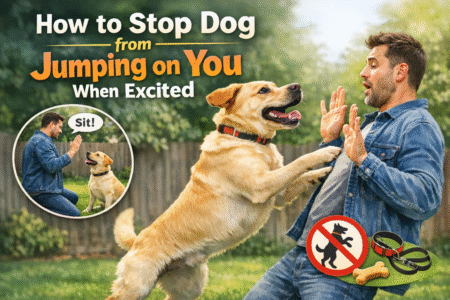
Dog owner always thinks How to Stop Dog from Jumping on You When Excited, you can teach them to greet you calmly with clear, consistent training and rewards. I’ll show you simple steps you can use every day to withhold attention for jumping, reward four paws on the ground, teach an easy sit-and-stay, and practice greetings with other people so the behavior sticks.
I’ll explain why dogs jump, the core training rules that work, practical step-by-step drills, ways to manage high energy, and common mistakes to avoid. Follow my plan and you’ll turn chaotic greetings into calm moments without punishment or confusion.
Why Dogs Jump When Excited
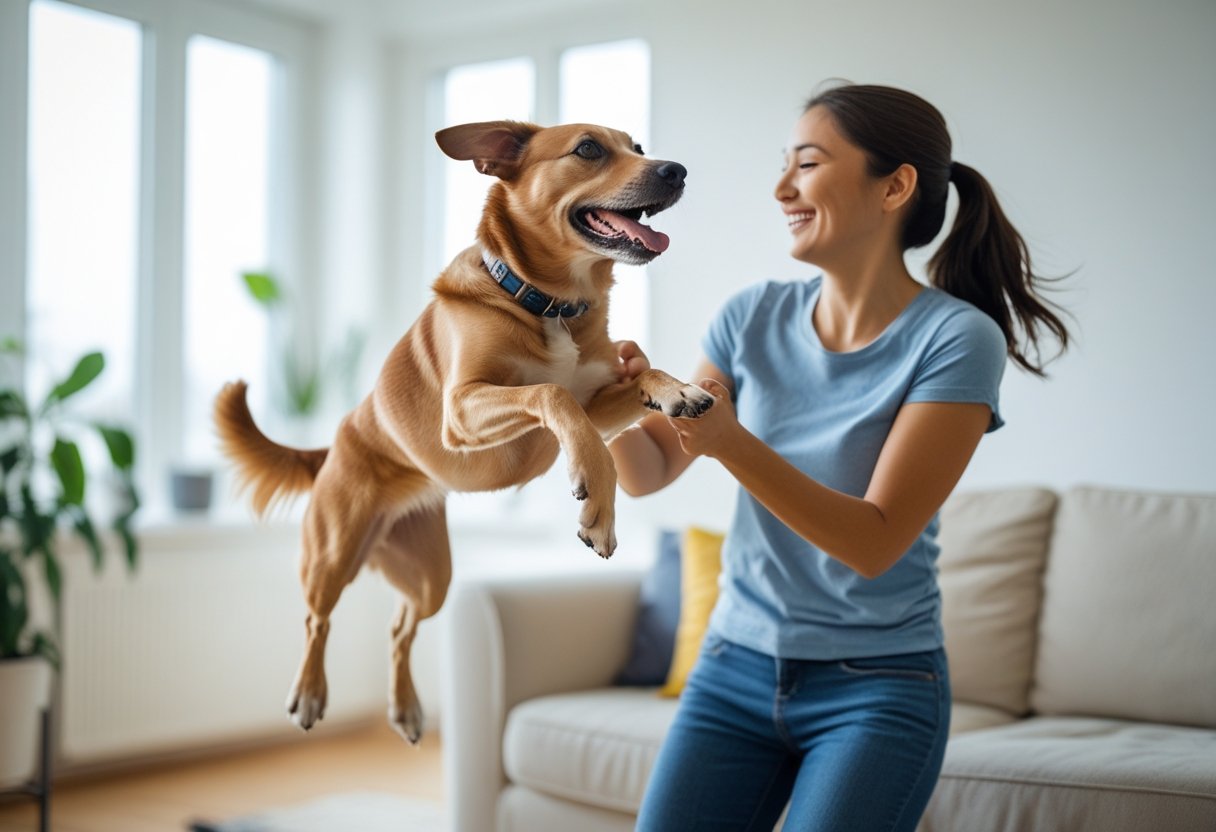
I see three main reasons dogs jump: natural greeting moves, a drive to get attention, and the way people reward the behavior. Each reason changes how you should respond and train.
Canine Greeting Behaviors
Dogs often use their front paws and body height to make contact because their faces are social tools. When a dog jumps, it is trying to get close to your face and smell you, which is how dogs gather information.
Puppies learn this from littermates and from adult dogs that allow close contact. Big dogs do the same thing; their full-body lean projects friendliness but can be clumsy. I watch body language: wagging tails, loose mouths, and a soft posture usually mean the dog is greeting, not attacking.
Teaching an alternative, like a calm sit, gives the dog a clear way to say hello without using paws. Consistent practice helps the dog replace jumping with a polite gesture.
Attention-Seeking Motives
Many dogs jump because attention is the outcome they want. Attention can be positive—petting, talking, or treats or negative, like pushing the dog away. To a dog, any response is better than none.
I tell owners to notice what follows jumping. If you push the dog off or yell, the dog still gets interaction and may keep jumping. Timing matters: rewarding four paws on the floor with a treat or a calm touch teaches the dog which behavior actually brings the attention it wants.
Some dogs jump more when they’re excited by guests, walks, or meals. Identifying the triggers helps you set up practice sessions where you control the reward and gradually lower the dog’s arousal.
Impact of Reinforcement
Reinforcement shapes whether a dog repeats a behavior. If jumping has been reinforced, even unintentionally, the dog will keep doing it. I separate reinforcement into two kinds: immediate rewards (treats, petting) and delayed or inconsistent rewards (attention only sometimes).
Consistency is critical. If one person ignores jumping while another laughs and pets, the dog learns mixed rules. I recommend that everyone use the same response: turn away or step back until the dog has all four paws down, then reward.
Using short, frequent training trials helps replace the jumping habit. Positive reinforcement for the alternate behavior—like sitting or keeping paws on the ground—creates a reliable routine that stops the jumping over time.
How to Stop Dog from Jumping on You When Excited 10 Proven Tips
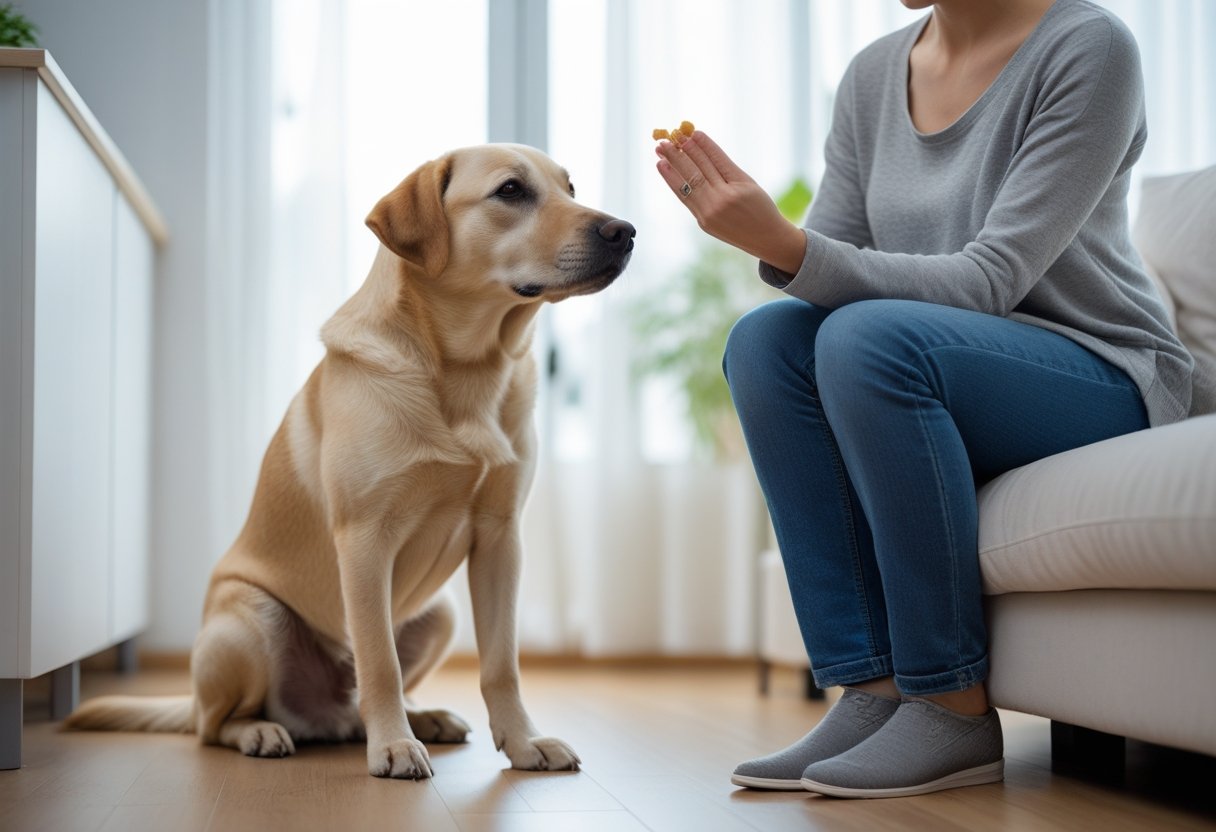
I focus on two practical ideas that change jumping: give a clear, consistent rule your dog can learn, and stick with it even when progress is slow. I show how to reward the right action and remove attention for the wrong one so your dog learns what you want.
1- Consistency and Patience
I set one rule and apply it every time. For example: “four paws on the floor” or “sit for greetings.” Everyone in the home must follow the same rule. If guests, kids, or other family members sometimes allow jumping, the dog gets mixed signals and relearns the wrong behavior.
I reward the desired action immediately. Praise, petting, or a small treat should come the moment my dog’s feet hit the floor. I also remove attention the instant my dog jumps—turn away, cross my arms, or step back. This teaches the dog that jumping stops rewards.
Progress can be slow, so I plan short, frequent training sessions. I track small wins, like fewer jumps per greeting, and raise my expectations gradually. Patience prevents me from reverting to old habits that confuse the dog.
2- Setting Clear Boundaries
I make the boundary obvious and easy to follow. Physical cues help: a leash by the door, a mat to send the dog to, or asking for a sit before I reach the front step. These tools create structure while the dog learns the rule.
I avoid mixed signals that reward jumping. I never push the dog away, knee-block, or scold in a way that gives attention. Even negative touch can teach the dog that jumping gets a response. Instead, I use neutral removal of attention when they jump.
I tell guests exactly what to do. I ask them to ignore the dog until I say it’s okay, or to ask the dog to sit. Consistent expectations across people speed learning and make the boundary real for the dog.
3- Withholding Attention
When my dog jumps, I turn my body away and keep my arms folded. I do not push, shout, or touch the dog. Turning away removes the reward the dog wants: my attention.
If the dog follows and jumps again, I keep facing away or step out of the room for a few seconds. I return only after the dog has four on the floor. I repeat this every time jumping starts so the dog learns attention stops when paws go up.
I ask family and visitors to use the same rule. Consistent responses from everyone prevent mixed messages and speed learning.
4- Teaching the Sit Command
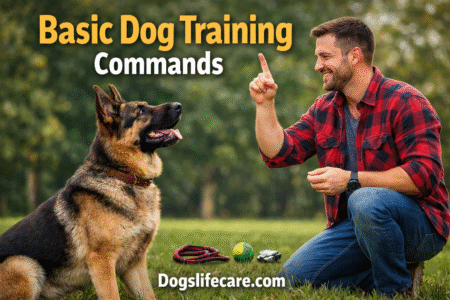
I teach “sit” as an alternative behavior that prevents jumping. I start with treats held near the dog’s nose, then move the treat upward so the dog naturally sits. I say “sit” the moment the rear touches the floor, then reward immediately.
Next I practice at doorways and during arrivals. I enter calmly and cue “sit.” If the dog jumps, I turn away and try again. I gradually increase distractions and practice with different people.
I fade treats by rewarding every other successful sit, then with praise. The goal is a reliable sit that competes with the urge to jump.
5- Reinforcing “Four on the Floor”
I define “four on the floor” as the moment all four paws touch the ground. I carry small treats and click or mark the instant the dog is grounded, then give the treat. Timing must be precise for the dog to link the reward to the behavior.
I use short drills: approach, wait for four on the floor, mark and treat. I mix in longer waits until the dog stays down for several seconds. I reward calm greetings with low-voice praise.
I involve friends so the dog learns this rule with anyone. Over time I replace treats with brief petting or a calm “good” once the dog reliably keeps four on the floor.
6- Exercise and Mental Stimulation
I give dogs a solid exercise session before times when people arrive. A 20–30 minute walk at a brisk pace or a short play session with fetch reduces excess energy that fuels jumping. For high-drive dogs, I add a 10–15 minute game of tug or off-leash running in a safe area.
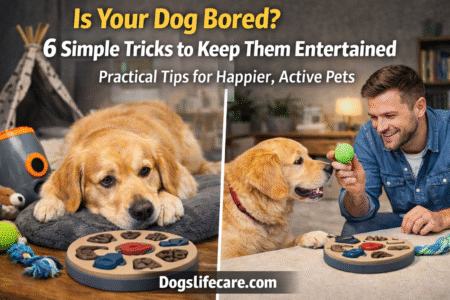
I use mental work to tire them out, too. Puzzle feeders, scent games (find the treat), and 5–10 minute training drills for sit, down, and watch-me build focus. I alternate physical and mental tasks so the dog learns to switch from excited to attentive on cue.
I reward calm behavior right away. If the dog stays seated when I open the door, I give a small treat and quiet praise. Consistent timing makes calm greetings a clear, stronger habit than jumping.
7- Using Leash and Barriers
I keep the dog on a short leash when guests arrive so I can control forward movement. I step on the leash or hold it low to prevent lunging while asking the dog to sit. This stops the dog from practicing successful jumps.
I also use simple physical barriers: a baby gate, closed door, or set-up in a mudroom. I ask guests to wait behind the barrier until the dog is calm. If the dog paws or jumps at the gate, I ignore and wait for four paws down before allowing access.
I teach a specific release cue (like “okay”) so the dog knows when greetings start. Using leash and barriers together gives me control and clear signals the dog can learn from.
8- Controlled practice sessions
I use controlled practice sessions to build skill slowly. Short drills teach the dog to respond under mild excitement before real-world tests.
Set up practice by having a family member ring the bell or knock. I cue the dog to sit or go to place, then reward if they comply. Increase difficulty by adding a brief delay, more movement, or different people.
Keep sessions under five minutes and end on a success. Frequent, short practices are more effective than long, infrequent ones.
9- Avoid Punishment
I avoid punishing or physical corrections. Punishment often increases arousal or creates fear, which makes jumping worse or causes other problems.
I don’t knee-block, shove, or yell. Those actions still give attention or can look like play. Instead, I rely on ignoring, management, and rewards for the correct behavior.
If the dog shows stress or reactivity, I slow down training and consider help from a certified trainer to adjust techniques safely.
10- Monitor Progress
I monitor progress and adjust rewards as the dog improves. Gradual fading of treats keeps the behavior durable.
Start with treats every time, then move to intermittent treats with consistent praise. Increase real-life practice: different people, locations, and higher excitement levels. If the dog regresses, I return briefly to more frequent rewards and simpler setups.
Track small wins—consistent four-paw greetings, quicker sits, or calm responses to strangers—and build from those milestones.
Common Mistakes and What to Avoid
I focus on methods that keep both people and dogs safe. I point out actions that slow learning and show how to react so training stays steady and clear.
Avoiding Physical Punishment
I never use hitting, kneeing, or stepping on a dog to stop jumping. Physical punishment can cause fear, pain, and a break in trust. A scared dog may stop showing the behavior around you, but the problem often worsens in other settings or turns into fear-aggression.
If a dog is too excited, I remove them from the situation or ask a guest to ignore them until they calm. I use timing instead: reward the instant all four paws touch the floor. That clear, immediate feedback teaches the dog what I want without causing harm.
Maintaining Consistent Reactions
I make sure everyone who meets the dog follows the same rules. If one person pets while the dog jumps and another ignores, the dog gets mixed signals. Inconsistent responses teach the dog that jumping sometimes works.
I give exact instructions to guests: no eye contact, no touching, and only greet when the dog sits with four paws down. I also keep training cues simple—one word like “off” or “sit”—and use the same rewards each time. Repetition with the same rules speeds learning.
Handling Setbacks Appropriately
I expect setbacks and plan for them. Dogs learn through repetition, so a relapse after excitement or a long break doesn’t mean failure. I treat each setback as data: what triggered the jump, who was present, and whether I rewarded calm behavior earlier.
I adjust by increasing control: use a leash at the door, ask guests to stay seated, or give short training sessions before guests arrive. I avoid punishment or yelling after a relapse. Instead, I refocus on small wins and reward the first calm behavior immediately.
Training with Guests and in Public Settings
I focus on clear, repeatable steps that make greetings calm and keep all four paws on the floor. Use consistent cues, firm timing, and rewards so your dog learns what you expect.
Enlisting Help from Family and Visitors
I ask everyone who meets my dog to follow the same rules. I show them to ignore jumping: no eye contact, no pushing, and no speaking until the dog has four paws on the floor. If needed, I have them cross their arms or turn away to make ignoring easier.
I teach one simple cue like “off” or “four” and ask helpers to reward the dog only when it sits or stands with all paws down. I give small treats through a closed door first, then during short face-to-face practice. I also use a leash or baby gate so guests can safely practice without being knocked over.
I remind guests to keep visits short and calm at first. Consistent responses by family and visitors speed learning and cut confusion.
Practicing Greetings Outside the Home
I train greeting behavior in public places where distractions are higher. I start on a quiet street or park bench, keep my dog on a short leash, and ask for a sit before anyone approaches. I reward the sit immediately with a treat or brief praise when all four paws stay on the ground.
I add steps gradually: first one passerby, then a friend who knows the cue, then groups of people. If my dog lunges or jumps, I step back, reset the sit, and only allow interaction after the dog holds four paws down for two seconds. I avoid yelling or pushing; instead I use calm redirection and consistent timing.
I increase difficulty by changing locations and people, always reinforcing the sit or “four” with high-value rewards. This builds reliable behavior both at home and in public.
Frequently Asked Questions
I focus on clear, practical steps you can use right away. I cover training steps, simple tools, and ways to manage both puppies and adult dogs.
What are effective methods to prevent dogs from jumping on guests?
I teach the dog to keep all four paws on the floor and reward that calm behavior. I ask guests to ignore the dog until it sits or stands with paws down, then offer a treat or calm praise.
I use a consistent cue like “off” or “four on the floor” and reward the correct response. I also put the dog on a short leash for the first 10–15 minutes when new people arrive to control excitement.
Can certain devices help in training my dog not to jump?
Yes. I sometimes use a front-clip harness or a gentle leader to reduce pulling and make it easier to guide the dog down. These tools do not punish; they give me better control while I teach alternative behavior.
I avoid devices that cause pain or fear. If a device seems to cause stress, I stop and try a reward-based method or consult a trainer.
What techniques can stop a puppy from jumping and biting when excited?
I interrupt jumping by turning away and folding my arms until the puppy calms, then I reward the calm moment. I teach “sit” and “leave it” early and practice them during short, fun sessions.
I give chew toys and redirect biting to appropriate items. I keep interactions low-key when visitors arrive so the puppy learns calm greetings instead of rough play.
Are there strategies to keep a dog from jumping on the bed?
I block access to the bed until the dog reliably follows a cue like “off” or “down.” I teach “place” on a dog bed or mat and reward staying there with treats and short release cues.
I keep the dog’s routine consistent: request the dog to go to its place before lights out or when guests enter. Over time, the dog learns the bed is off-limits unless invited.
How can I control my dog’s behavior when it jumps up while I’m seated?
I stand up and turn away until the dog puts all paws down, then I sit and reward calm behavior. I avoid petting or eye contact while the dog is jumping.
I practice asking for a sit or place from a seated position and reward compliance. If needed, I use a leash looped under my chair to gently prevent launches while training.
Why does my dog exhibit jumping and biting behaviors, and how can it be managed?
Dogs jump and bite because they want attention, to be close to your face, or because they are overstimulated. I reduce triggers by teaching clear alternative behaviors and by managing the environment during high-energy moments.
I use consistent rewards for calm greetings and ignore unwanted actions. If the behavior is strong or risky, I get help from a certified trainer or behaviorist.













Leave a Reply