
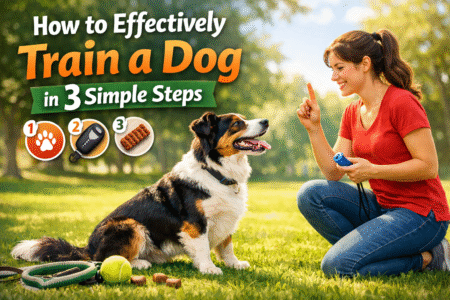
Having spent years living with and training dogs of all breeds and temperaments, I’ve learned one thing: How to Effectively Train a Dog, isn’t about complicated techniques or harsh discipline it’s about understanding your dog, being patient, and applying the right strategies consistently.
If you’ve ever felt frustrated when your dog doesn’t listen, jumps on guests, or chews up your favorite shoes, you’re not alone. Over time, I’ve discovered three simple steps that consistently work, no matter your dog’s age or breed. These are steps that have strengthened my bond with every dog I’ve trained, and they can do the same for you.
How to Effectively Train a Dog in 3 Simple Steps
Before diving into specifics, it’s important to understand that all effective training comes down to three core principles. Following these steps consistently will make your dog more obedient, confident, and happy while also improving your bond. Let’s break them down:
Step 1: Build a Strong Foundation with Consistency
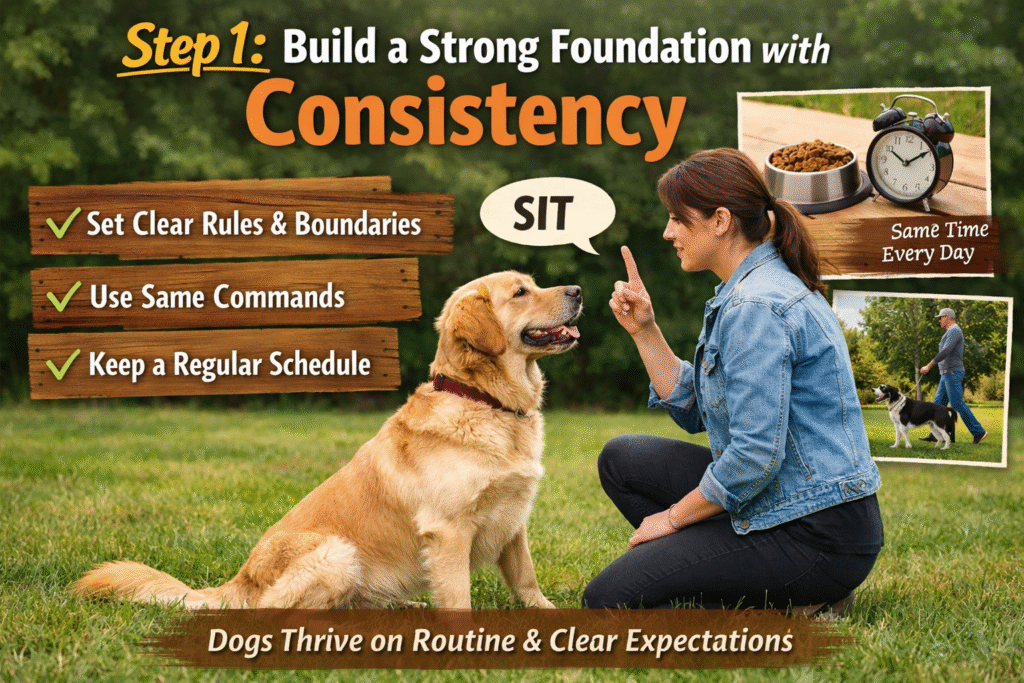
Consistency is the backbone of every well-behaved dog. Dogs are creatures of habit they feel secure when they know what to expect. If rules change from day to day, or if commands are used inconsistently, your dog will naturally get confused.
Practical Tips from Experience:
- Establish clear rules from the very beginning. For instance, decide whether your dog is allowed on the furniture and stick to it.
- Use the same command words every time. “Sit” should always mean “sit,” never “sit down” or “take a seat.”
- Keep routines consistent for feeding, walks, and playtime. Dogs thrive on predictability.
Real-Life Example:
I once had a young Labrador who would jump on guests. By consistently redirecting him to “sit” every single time, he learned within weeks that calm greetings are rewarded now he welcomes visitors politely every time.
Step 2: Use Positive Reinforcement
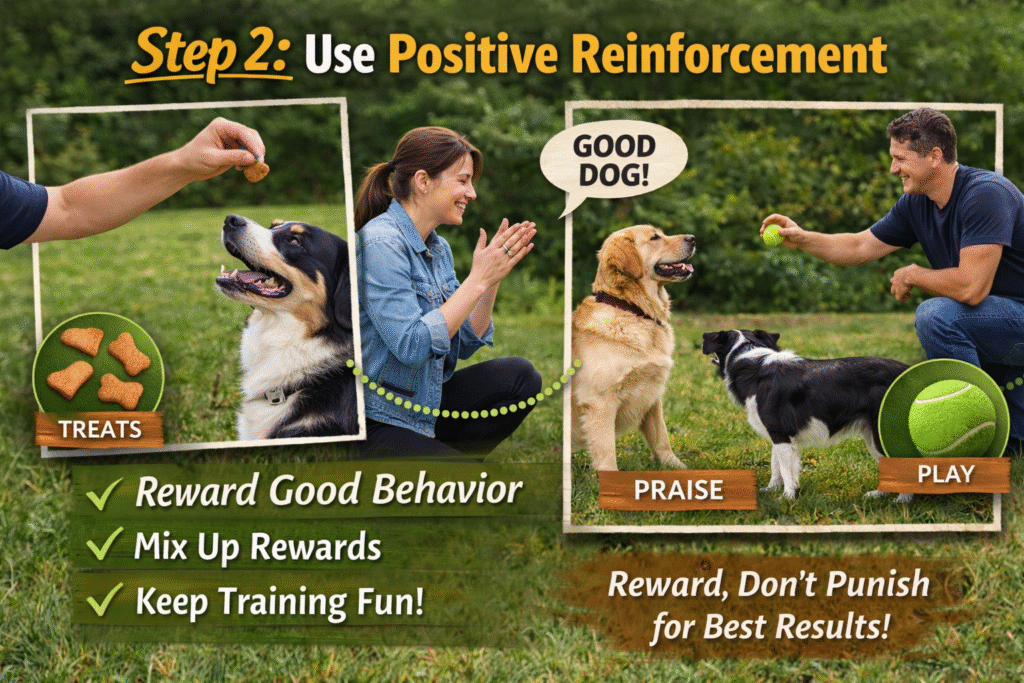
From my experience, dogs respond far better to rewards than punishment. Positive reinforcement encourages the behavior you want while keeping your dog confident and happy.
Proven Techniques:
- Treats: Small, high-value treats work best for new or difficult commands.
- Praise: A happy voice and gentle petting reinforce that your dog did something right.
- Play: Some dogs respond more to a favorite toy or a quick game than treats.
Tips for Success:
- Reward immediately after the desired behavior. Timing is critical.
- Vary your rewards occasionally to maintain excitement. Dogs notice patterns, and variety keeps them engaged.
Example from My Experience:
When teaching my German Shepherd puppy to “stay,” I found that combining verbal praise with a small treat each time created rapid progress. Soon, he could stay calmly even without the treat he had learned to associate obedience with positive outcomes.
Step 3: Address Problem Behaviors Proactively
Waiting for problem behaviors to escalate is a common mistake. Experienced dog owners know that addressing issues early prevents frustration and often avoids professional intervention later.
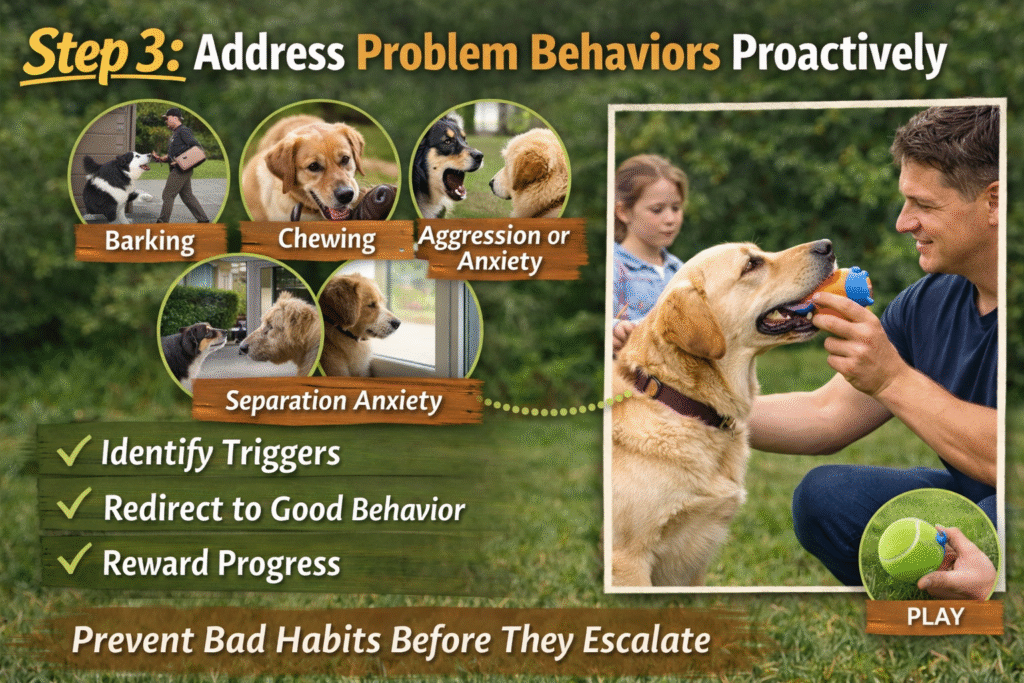
Common Issues & My Strategies:
- Barking: Identify the trigger, redirect attention, and reward calm behavior.
- Chewing: Provide suitable chew toys and supervise play. Preventing destructive behavior is more effective than correcting it after the fact.
- Aggression or Anxiety: Break behaviors into small steps, reward incremental progress, and avoid forcing interactions.
- Separation Anxiety: Gradually increase alone time, pairing it with calm rewards and predictable routines.
Example:
I had a Border Collie who loved to chew anything in sight. By proactively providing durable chew toys and rewarding him for using them, he learned what was acceptable, saving my furniture and my sanity.
Conclusion
Training a dog is a journey, not a one-time task. From my years of experience, I’ve learned that the formula for success is simple:
- Consistency – clear rules and routines
- Positive Reinforcement – rewarding the behaviors you want
- Proactive Problem-Solving – preventing bad habits before they start
With patience, dedication, and a little understanding of your dog’s perspective, these steps can transform any relationship between owner and pet. Start small, stay consistent, and enjoy the process you’ll be rewarded with a happy, well-behaved companion and a bond that lasts a lifetime.


















Leave a Reply