


You can mentally tire out your dog by giving them focused tasks that require thinking, problem-solving, and concentration. Puzzle toys, short training drills, scent games, and interactive play force your dog to use their brain, which often tires them faster than pure physical exercise.
Mix a few quick training sessions with scent work, food puzzles, and interactive games to calm your dog and reduce restless behavior.
This article shows why mental stimulation matters, how to set up simple games and training that challenge your dog, and creative enrichment ideas you can use at home to keep your dog satisfied and calmer.
- Understanding Mental Stimulation for Dogs
- Why Mental Exercise Matters
- Differences Between Physical and Mental Tiredness
- Signs Your Dog Needs Mental Stimulation
- Interactive Games to Challenge Your Dog
- Puzzle Toys and Treat Dispensers
- Hide and Seek
- Scent Work Activities
- Training Techniques for Mental Fatigue
- Teaching New Tricks
- Obedience Training Sessions
- Impulse Control Exercises
- Enrichment Activities for Problem Solving
- DIY Enrichment Ideas
- Food-Based Enrichment
- Rotation of Toys and Activities
- Creative Ways to Engage Your Dog’s Mind
- Interactive Play with Humans
- Dog Sports for Mental Engagement
- Socialization Experiences
- Frequently Asked Questions
- What are effective indoor activities that help tire out a dog?
- Can short sessions of mental stimulation significantly exhaust a dog?
- What types of mental exercises are best for tiring out a dog at home?
- What strategies can I use in the morning to mentally engage my dog?
- How do interactive toys contribute to a dog’s mental exhaustion?
- Are there training methods that help to mentally tire a dog more efficiently?
Understanding Mental Stimulation for Dogs
Mental work helps dogs use their senses, learn new skills, and solve problems. It reduces boredom and unwanted behaviors by giving your dog focused tasks that tire the brain.
Why Mental Exercise Matters
Mental exercise keeps your dog sharp and calm. Dogs that use their nose, memory, and problem-solving skills show less hyperactivity and fewer destructive habits like chewing or digging. Teaching new cues, playing scent games, or using puzzle feeders gives your dog a clear goal and rewards success.
Mental tasks also build trust between you and your dog. Short, frequent training sessions strengthen communication and make outings smoother. For senior dogs, mental work can slow cognitive decline and keep daily routines enjoyable.
Differences Between Physical and Mental Tiredness
Physical exercise burns energy through running, walking, and play. Mental exercise tires the brain by asking your dog to think, search, or make choices. A long walk may leave muscles tired but still leave a dog restless if the brain hasn’t worked.
You can combine both: a brisk walk before a training session improves focus. Mental tasks like scent trails, puzzle toys, and obedience drills can tire your dog in 10–20 minutes, often faster than physical play alone.
Signs Your Dog Needs Mental Stimulation
Look for repeated, bored behaviors: persistent barking, chewing household items, pacing, or digging. These actions often mean your dog needs more cognitive work. Other signs include constant shadowing of you, over-excitement at small cues, or quickly losing interest in toys.
Also watch for restlessness after physical exercise. If your dog still seems unsettled after a walk, try a short puzzle game or training routine. Note changes in attention span or sudden destructive acts; both suggest you should increase mental challenges.
Interactive Games to Challenge Your Dog
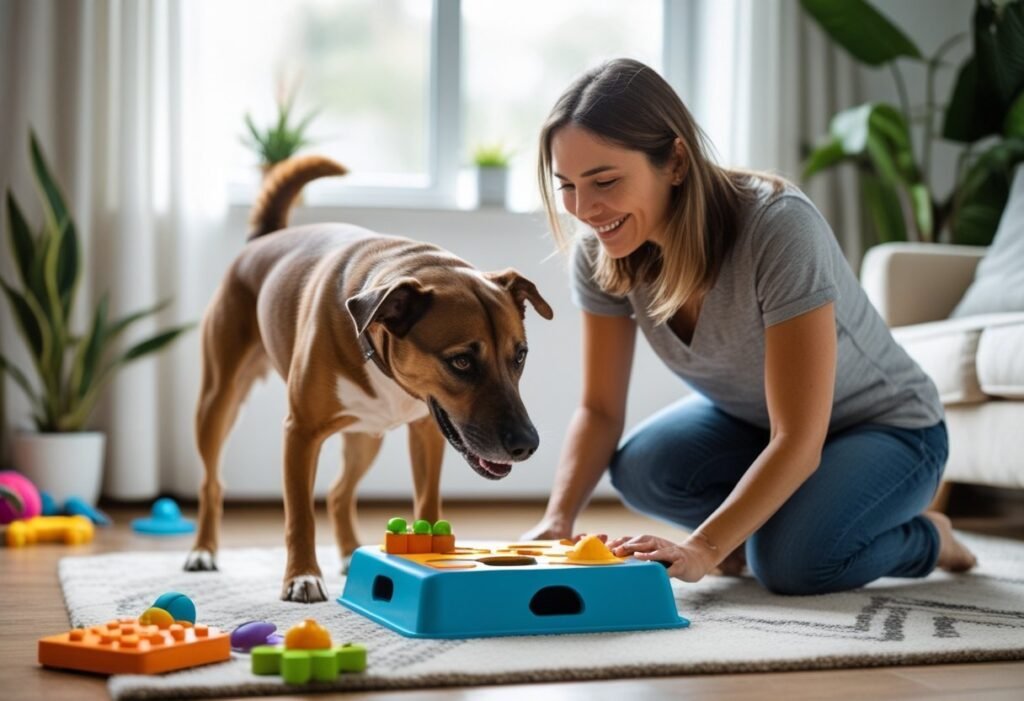
These activities push your dog’s brain, use natural instincts, and often combine thinking with light movement. You’ll need simple tools like toys, treats, and a short training session to get each game working well.
Puzzle Toys and Treat Dispensers
Puzzle toys force your dog to solve a problem to get a reward. Start with an easy dispenser that releases one treat at a time. Let your dog watch you load it, then show how it works. If they get frustrated, step in with a hint nudge the toy or partially open a compartment so they learn the cause and effect.
Rotate toy difficulty every few days. Use slow-feeding bowls, hide-and-seek treat mats, or sliding puzzles that require paw or nose work. Supervise new toys to avoid chewing hazards. Clean toys and check for wear often. Aim for short sessions 5 to 15 minutes to keep your dog engaged without tiring them physically.
Hide and Seek
Hide and seek trains focus and recall while rewarding your dog’s problem-solving. Start by asking your dog to sit and stay, then hide in an easy spot like behind a door. Call them with a happy, clear cue such as “Find me!” Praise and treat when they locate you. Gradually increase hiding difficulty and distance.
You can also hide toys or small treat piles around the house. Use a release cue to let your dog search. Keep sessions brief and upbeat. If your dog gives up quickly, make the next hide easier or leave scent trails by rubbing the toy on a surface they know. This builds confidence and makes the game more rewarding.
Scent Work Activities
Scent games tap into your dog’s strongest sense. Start with a single odor like a favorite treat or a cotton ball with a dab of food oil. Teach a cue like “Search.” Place the odor in visible spots first, then move to hidden locations under rugs or behind furniture.
Use a simple grid of cups and hide a treat under one cup to teach directed sniffing. Reward with praise and a high-value treat when they indicate the correct cup. Increase challenge by adding more cups or using outdoor areas. Rotate odors and keep sessions varied to maintain interest. Always end on a success so your dog stays motivated.
Training Techniques for Mental Fatigue
Use structured learning that challenges your dog’s brain. Short, focused sessions with clear rewards teach skills and burn mental energy. Pick one target behavior per session and end on a success.
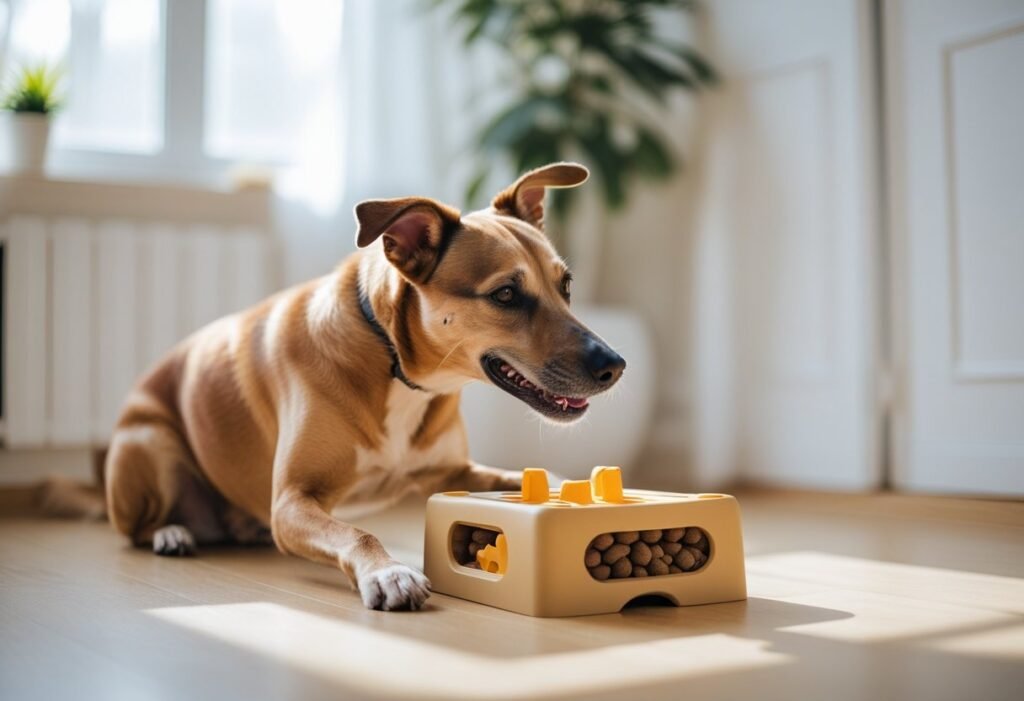
Teaching New Tricks
Introduce one trick at a time, breaking it into tiny steps. For example, train “spin” by luring with a treat near the nose and moving it in a circle. Reward each small progress a sniff, a full turn so your dog links the action to the treat.
Keep sessions to 5–10 minutes, 2–4 times a day. Use high-value treats you reserve only for training to keep motivation high. Fade the lure over several sessions: reward for the completed behavior, then reduce treat frequency while adding a verbal cue and hand signal.
Vary the environment slowly. Start in a quiet room, then practice near the door, then outside. This prevents the trick from being context-specific and keeps your dog mentally engaged.
Obedience Training Sessions
Structure obedience work around short drills with clear criteria. Use commands like sit, down, recall, and heel in 3–5 minute blocks. Run each drill 5–10 times, changing pace and distance to keep thinking sharp.
Use a simple reward plan: treat → click or marker word → release. Increase difficulty by combining commands (sit, wait, then recall). Track progress with a checklist so you know when to raise the challenge.
End each session with a calm “finish” cue and a low-energy reward, so your dog practices both focus and relaxation. Regular, predictable training builds mental stamina more than long, unfocused sessions.
Impulse Control Exercises
Teach impulse control with games that require waiting. Start with “leave it”: place a treat under your hand, cover it, and reward when your dog stops trying and looks up. Increase difficulty by using visible treats on the floor and delaying the release.
Use “wait” at doorways and “stay” during meal prep to generalize control. Practice the 3 D’s: Distance, Duration, and Distraction. Increase one factor at a time first stand farther away, then make your dog wait longer, then add a distraction.
Include enrichment puzzles that require step-by-step problem solving. These force your dog to plan and resist grabbing food impulsively. Consistent practice of impulse control reduces reactive behavior and tires the brain effectively.
Enrichment Activities for Problem Solving
These activities push your dog to think, use their nose, and figure out steps to get rewards. They focus on problem-solving skills, patience, and building confidence through small challenges.
DIY Enrichment Ideas
Make simple puzzles at home using boxes, towels, and cups. Hide treats inside a muffin tin and cover holes with tennis balls so your dog must remove the balls to reach the food. Fold kibble into a towel and tie loose knots so your dog has to unroll and sniff to find bites.
Use a cardboard box with several compartments and place different-smelling items in each compartment to train scent discrimination. For shy dogs, start with easy wins visible treats then increase difficulty by hiding items under lids or inside containers that require pawing or nosing.
Rotate difficulty: start with one step, then add lids, sliding pieces, or locked compartments. Supervise for safety and remove anything your dog could swallow.
Food-Based Enrichment
Turn mealtimes into a puzzle. Use food dispensing toys like Kongs stuffed with wet food and frozen, or slow feeder mats that force licking and small bites. These slow eating and make your dog work for calories.
Scatter dry kibble in a sniffing tray or hide small piles around a room so your dog must search using scent. For high value rewards, use small pieces of cooked chicken or cheese inside puzzle toys to keep motivation high without overfeeding.
Measure portions to avoid extra calories. Clean toys and rotate stuffing recipes to prevent bacterial growth. Always supervise when using new food toys to ensure your dog doesn’t chew or swallow unsafe pieces.
Rotation of Toys and Activities
Change toys and games every few days to keep challenges fresh. Put some toys away for a week, then reintroduce them to renew interest. Mix types: scent games one day, puzzle toys the next, and short training drills another day.
Create a predictable routine with variety e.g., morning scent work, midday chew puzzle, evening training session. Track which toys engage your dog most and increase variation for bored or clever dogs. Replace worn toys and inspect for hazards before each use.
Creative Ways to Engage Your Dog’s Mind
You can use short training drills, play puzzles, and new social settings to tire your dog mentally. Pick activities that match your dog’s energy, breed traits, and food or toy preferences.
Interactive Play with Humans
Teach your dog short, focused games that require problem solving. Try a five minute “find it” session: hide treats under cups or in different rooms and increase difficulty as your dog improves. Use a release word so your dog learns to wait and think before searching.
Rotate toys to keep novelty. Offer puzzle feeders, lick mats, or a stuffed Kong during calm times. Supervise the first few uses so your dog learns how to get the reward without getting frustrated.
Use training games that mix obedience and fun. Work on two-minute sessions of “leave it,” “wait,” and then reward with a quick tug or fetch. End each session on a success to build confidence and focus.
Dog Sports for Mental Engagement
Enroll in a sport that matches your dog’s instincts. Agility trains quick decision-making and body awareness. Rally obedience builds focus through short, varied exercises. Scent work taps natural sniffing skills and rewards persistence.
Start with beginner classes or short home drills. Keep sessions under 10 minutes for new skills and gradually increase time. Use clear cues and high-value treats to reinforce correct choices.
Compete only if your dog enjoys it. Recreational practice gives mental stimulation without pressure. Even non-competitive play like structured fetch or timed scent games sharpens problem-solving and listening skills.
Socialization Experiences
Plan controlled social outings that challenge your dog’s behavior. Short, structured meetups with one new dog at a time teach reading body language and impulse control. Use calm greetings and reward polite behavior.
Vary environments to build confidence. Visit a quiet park, a pet-friendly store, or a friend’s yard on different days. New sights and smells stimulate thinking without long physical exertion.
Mix in formal classes like puppy socialization or group manners. These settings provide guided interaction and teach your dog to perform under mild distractions. Keep sessions short and positive so your dog stays engaged.
Frequently Asked Questions
You can use short, focused games, puzzle toys, and training drills to burn mental energy. Mix scent work, problem-solving toys, and quick training sessions to make your dog calmer and more focused.
What are effective indoor activities that help tire out a dog?
Use food puzzle toys, snuffle mats, and treat-dispensing balls to keep your dog busy for 10–30 minutes at a time.
Play hide-and-seek with treats or toys around the house to engage their nose and brain.
Set up a simple obstacle course with cushions and boxes for short bursts of physical and mental work.
Teach new tricks in 5–10 minute sessions to challenge their thinking and reward focus.
Can short sessions of mental stimulation significantly exhaust a dog?
Yes. Fifteen to thirty minutes of focused mental work can be as tiring as a longer walk for many dogs.
Breed, age, and training level change how much mental work they need, so watch their cues.
Break activities into several short sessions across the day for steady mental fatigue.
End sessions while your dog is still willing and successful to keep them motivated.
What types of mental exercises are best for tiring out a dog at home?
Scent games that hide treats in boxes or a snuffle mat rank high for mental effort.
Interactive puzzle feeders and slow-feed toys force problem solving and patience.
Short, structured training sessions that teach new cues or refine known ones tax their focus.
Games that mix commands (sit, stay, find it) with movement add layers of challenge.
What strategies can I use in the morning to mentally engage my dog?
Start with 10 minutes of scent work, like hiding kibble in a room for them to find.
Follow with a brief training session that practices impulse control and basic cues.
Rotate toys so the first activity of the day feels new and interesting.
Use a food puzzle at breakfast to slow eating and give mental work before your day starts.
How do interactive toys contribute to a dog’s mental exhaustion?
Interactive toys require problem solving, which uses the same cognitive resources as training.
Toys that hide treats or require steps to release food keep your dog occupied and focused.
They slow down feeding and reward persistence, reducing boredom driven behaviors.
Switch toy types and difficulty levels to keep the challenge meaningful.
Are there training methods that help to mentally tire a dog more efficiently?
Clicker training or reward-marking shortens learning time and increases mental focus.
High-reward, short-repetition drills push cognitive effort without long sessions.
Chain behaviors into short sequences (sit > down > stay > touch) to raise complexity.
Add distractions gradually to make the same task require more attention.
















Leave a Reply