


Yes! dogs can safely eat chicken hearts when they’re properly sourced, prepared, and portioned. Chicken hearts are rich in protein, taurine, and essential micronutrients, making them one of the most beneficial organ meats for canine diets. However, they should only make up 5–10% of your dog’s total food intake to maintain nutrient balance.
What Are Chicken Hearts and Why They Matter
Chicken hearts are the muscular organs of poultry and are categorized as “muscle organ meats.” They contain amino acids and natural compounds that support heart health, muscle growth, and metabolism in dogs.
In many AAFCO-compliant raw and freeze-dried diets sold in the U.S., chicken hearts are included as a natural source of taurine and CoQ10.
Chicken Heart Nutrition Facts (Per 100 g, Raw)
| Nutrient | Amount | Function in Dogs |
|---|---|---|
| Calories | ~185 kcal | Energy & metabolism |
| Protein | 26 g | Muscle maintenance |
| Fat | 8 g | Energy, cell health |
| Taurine | High | Heart & eye support |
| Vitamin B12 | 7.6 µg | Brain & red blood cell health |
| Iron | 8 mg | Oxygen transport |
| Zinc | 4 mg | Immune and skin support |
| CoQ10 | Present | Cardiac energy production |
Key Health Benefits of Chicken Hearts for Dogs
Heart & Cardiovascular Support
High taurine and CoQ10 levels help protect against dilated cardiomyopathy (DCM) and promote cardiac muscle strength.
Protein-Rich Muscle Development
Supports recovery, lean mass, and endurance for working or athletic breeds.
Immune & Skin Health
Zinc and B-vitamins promote strong immunity and maintain a healthy coat and skin barrier.
High Palatability
Most dogs find chicken hearts irresistible, making them a natural appetite booster and training treat.
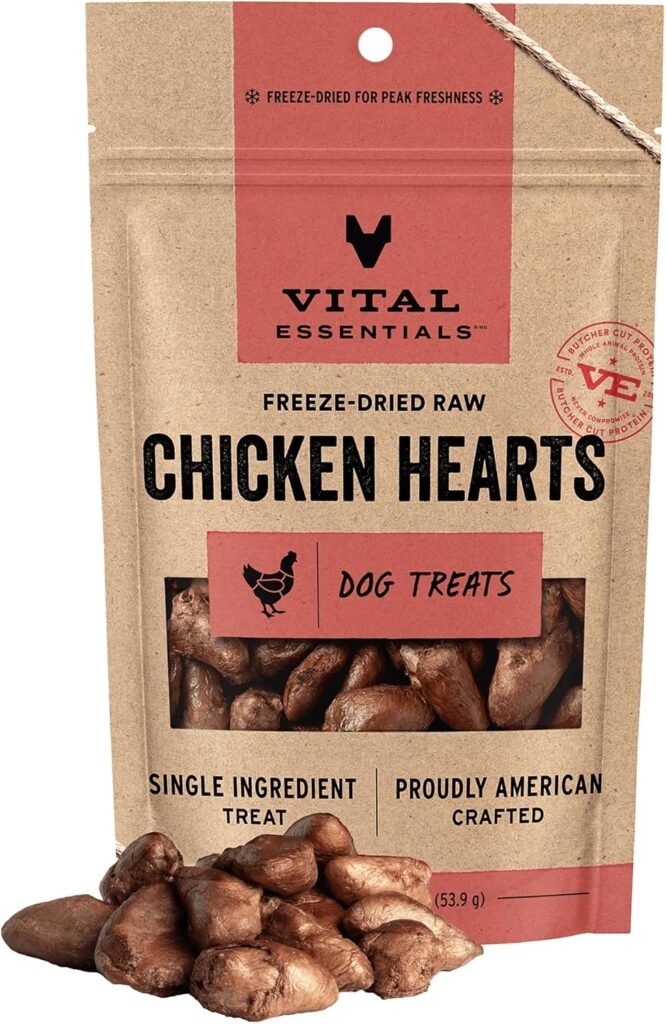
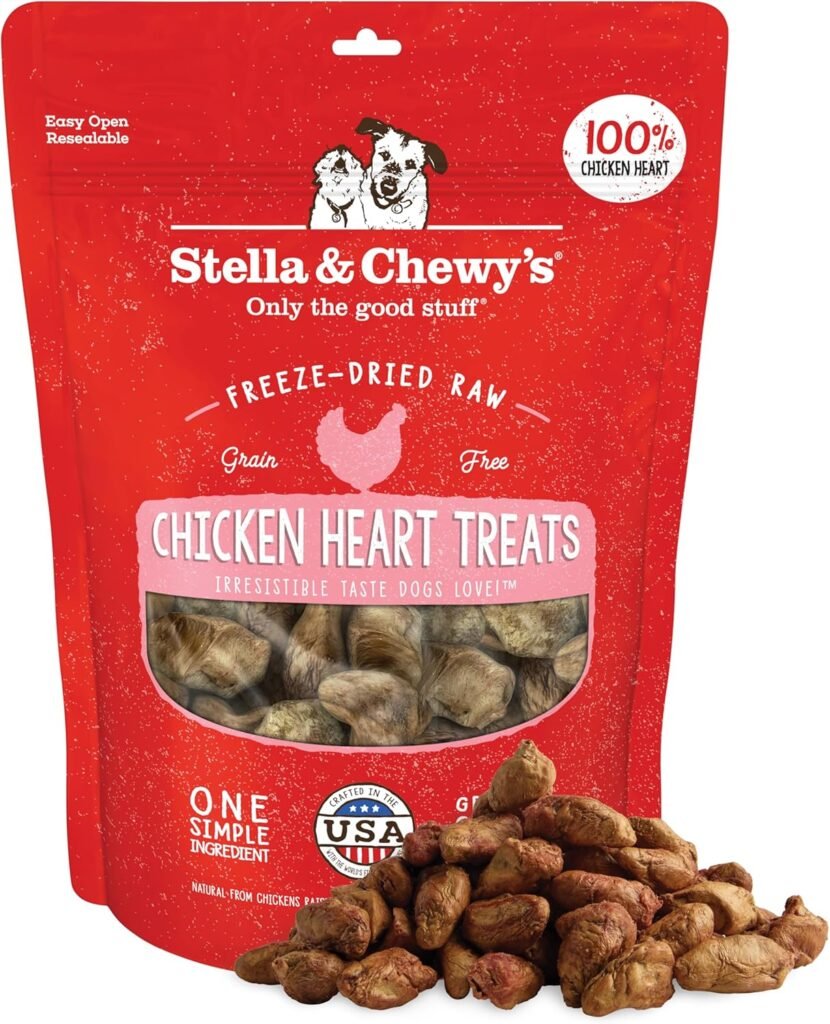
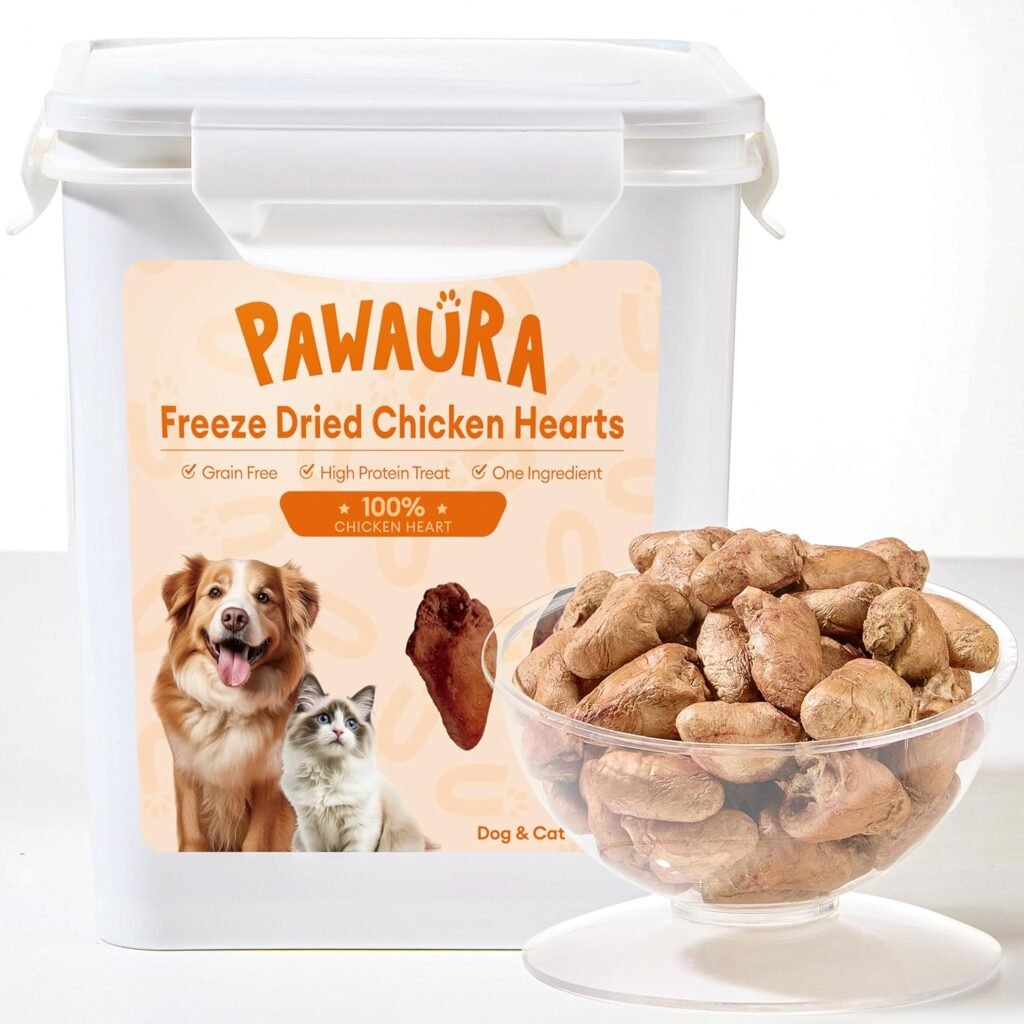
Explore Products
Risks and Precautions
| Concern | Description | Recommendation |
|---|---|---|
| Bacteria (Raw) | Salmonella or Campylobacter risk | Freeze 72 hrs or cook fully |
| Overfeeding | Nutrient imbalance, loose stool | Limit to 5–10% of diet |
| Fat Content | May irritate pancreatitis-prone dogs | Feed sparingly |
| Allergies | Some dogs react to poultry proteins | Substitute turkey/beef hearts |
Always wash hands, utensils, and prep surfaces after handling raw chicken.
Safe Preparation Methods
Cooked Chicken Hearts for Dogs
- Boil: Simmer plain for 10–15 minutes.
- Bake: 350°F for 20 minutes until firm.
- Air-dry: Use a dehydrator for chewy treats.
Avoid seasoning, oil, salt, garlic, or onion.
Raw Chicken Hearts for Dogs
- Use USDA-inspected poultry.
- Freeze at −4°F (−20°C) for 72 hours before serving.
- Thaw in the refrigerator, not on the counter.
Recommended Portions by Dog Size
| Dog Size | Approximate Weight | Safe Amount |
|---|---|---|
| Small | 10–20 lbs | 1–2 hearts, 2–3× per week |
| Medium | 20–50 lbs | 2–3 hearts, 2–3× per week |
| Large | 50–90 lbs | 3–5 hearts, 2–3× per week |
Rule of thumb: Organ meats (hearts, liver, kidney) combined should not exceed 10% of total diet.
When to Avoid Feeding Chicken Hearts
Avoid or limit feeding chicken hearts if your dog:
- Has poultry allergies or food sensitivities
- Suffers from pancreatitis or obesity
- Is on a prescription or cardiac diet (consult your vet first)
Comparing Chicken Hearts with Other Organ Meats
| Organ | Key Benefit | Feed Frequency |
|---|---|---|
| Heart | Taurine & CoQ10 for heart health | 2–3×/week |
| Liver | Vitamin A & iron | 1–2×/week (small amount) |
| Kidney | Selenium & zinc | 1×/week |
| Gizzard | Protein & texture | Any frequency; low micronutrients |
Veterinary Feeding Guidelines
The American College of Veterinary Nutrition (ACVN) recommends that organ meats be treated as functional supplements, not complete meals.
Chicken hearts can be used in:
- Raw or cooked home diets (with vet guidance)
- Commercial raw formulations
- Freeze-dried training treats
Veterinarians stress the importance of nutritional balance organs should complement, not replace, the core diet.
Signs of Overfeeding or Intolerance
Diarrhea or soft stools
Loss of appetite
Excessive itching
Lethargy
If symptoms persist >24 hours, discontinue feeding and seek veterinary advice.
Final Takeaway
Chicken hearts are a high-quality, nutrient-dense food that supports heart, muscle, and immune health in dogs. When fed in moderation, they offer natural sources of taurine, CoQ10, and essential minerals nutrients often missing from processed diets.
To ensure safety and balance, always source responsibly, prepare hygienically, and consult your veterinarian before making major dietary changes.



















Leave a Reply