
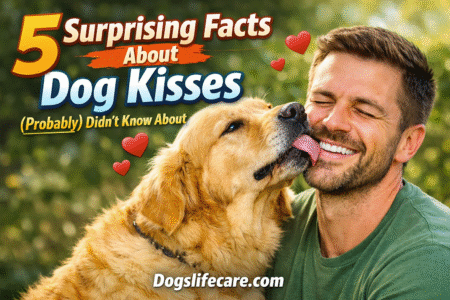
Dog kisses, also known as dog licks, are a common way for dogs to interact with their environment and the beings within it. Understanding the facts about dog kisses can help puppy parents better understand dog’s behavior like why dogs lick others and what the potential implications are. Here are 5 surprising FACTS ABOUT DOG KISSES you probably didn’t know: Puppies & dogs lick to groom themselves, dogs lick others to show submissiveness, dog mouths are not as “clean” as some say, SOME DOGS KISS more than others, and YOUR DOG DOESN’T kiss you doesn’t mean they don’t love you. Knowing these facts can help you better understand dog kisses and what they mean.
FACT 1: PUPPIES & DOGS LICK TO GROOM THEMSELVES
From a young age, puppies learn self grooming through licking. Licking is also a sign of welcoming other dogs into the pack. This ancestral grooming behavior is instinctive; puppies learn to lick themselves as a means of cleanliness, and it extends to social interactions within their canine family. It’s a foundational element of Canine behavior.
FACT 2: DOGS LICK OTHERS TO SHOW SUBMISSIVENESS
Adult dogs lick as a sign of deference or submissiveness to a dominant pack member. The dog doing the licking usually lowers its body to make itself smaller and looks up, adding to the effect of subordinate behavior. The dog receiving the face licks shows its dominance by standing tall to accept the gesture, but doesn’t return the favor. This behavior, rooted in pack dynamics, signifies a dog’s recognition of another’s higher status. Dogs lick others as a sign of welcoming and a sign of deference.
FACT 3: DOG MOUTHS ARE NOT AS “CLEAN” AS SOME SAY
Dogs and humans have comparable amounts of bacteria in their mouths. While the chances of getting sick from your dog’s kisses are generally low, the Centers for Disease Control (CDC) warns of the possibility of transferring diseases mouth-to-mouth between pets and their human parents, such as Giardia and staph infections. The oral microbiome in dogs, like in humans, hosts a variety of bacteria. It’s important to be aware of potential bacterial transmission. While dog saliva secrets have some benefits, caution is advised. Maintaining good hygiene practices, such as washing your face after face licks shows, is recommended.
FACT 4: SOME DOGS KISS MORE THAN OTHERS
If you, as a puppy parent encouraged or heaped praise on your furry friend when he kissed you, he’ll carry that behavior into adulthood. Similarly, if you’re the only one in your household that encouraged such behavior, your dog will likely kiss you more often than others. Positive reinforcement during puppyhood can strongly influence a dog’s behavior. If a puppy parent encouraged dog kisses, the dog will likely carry that behavior into adulthood.
FACT 5: IF YOUR DOG DOESN’T KISS YOU, DON’T WORRY, THEY STILL LOVE YOU
If your dog doesn’t kiss you, that doesn’t mean he dislikes you, nor does it mean he is depressed or physically ill in any way. A sudden change in his behavior, however, like normally being very kissy and stopping for no apparent reason, might be cause for concern. Consult your vet whenever you see a major shift in your dog’s behavior like this. Every dog expresses affection differently. If YOUR DOG DOESN’T shower you with kisses, they still love you.













Leave a Reply