

You are lying in the dark, staring at the ceiling, listening to your dog’s loud breathing. The room is quiet, but your dog is panting, shifting, maybe even pacing. It is hard to sleep when you are wondering if something is wrong.
Some panting at night can be normal. Dogs use panting to cool their bodies and to release a bit of tension, just like we might sigh. But when panting is new, very loud, or paired with restlessness, it can signal a problem that needs attention.
In this guide, you will learn four common reasons dogs pant at night: being too warm, stress or anxiety, pain, and medical problems involving the heart, lungs, or hormones. You will also get simple, vet-approved steps you can try tonight to help your dog settle.
You are not overreacting by looking this up. Caring enough to ask questions is the first step toward helping your dog feel safe and comfortable again.
Key Takeaways:
Many dogs pant at night for normal reasons, like cooling down, but sudden or intense panting can be a sign of a deeper issue.
A warm room or thick coat can cause nighttime overheating, making your dog pant to release heat and stay comfortable.
Anxiety, stress, loud noises, or nighttime fears often trigger restless panting, pacing, whining, and trouble settling.
Pain is one of the most overlooked reasons for night panting—especially joint pain, arthritis, injuries, or tummy discomfort.
Certain medical problems, such as heart disease, lung issues, or hormone conditions like Cushing’s disease, can cause heavy panting at rest.
Always compare the panting to your dog’s normal behavior; sudden changes or patterns that worsen over time deserve attention.
Cooling the sleeping area, improving airflow, and using light bedding can quickly reduce heat-related panting.
A predictable bedtime routine, gentle reassurance, and daytime exercise help calm anxious or unsettled dogs at night.
Record short videos of unusual panting—this helps your veterinarian understand what is happening and diagnose more accurately.
Seek vet care immediately if panting is paired with pale gums, coughing, collapse, a bloated belly, vomiting, or dramatic changes in thirst or appetite.
Is Nighttime Panting Normal In Dogs Or A Red Flag?
Panting is one of the main ways dogs cool themselves. They do not sweat over their whole body like people do. Instead, they move air over their tongue and throat, which helps release heat and moisture.
So panting can be normal after exercise, in a warm room, or when your dog is excited to see you. Many healthy dogs will pant a little as they fall asleep on a hot summer night.
Nighttime panting becomes more concerning when it looks different from your dog’s usual behavior. Very fast, noisy panting, pacing, whining, or panting that does not ease after the room cools can signal stress, pain, or illness. Signs like pale or blue gums, coughing, or collapse are emergencies.
For a helpful overview of normal and abnormal patterns, you can read the vet-reviewed guide on dog panting at night from PetPlace.
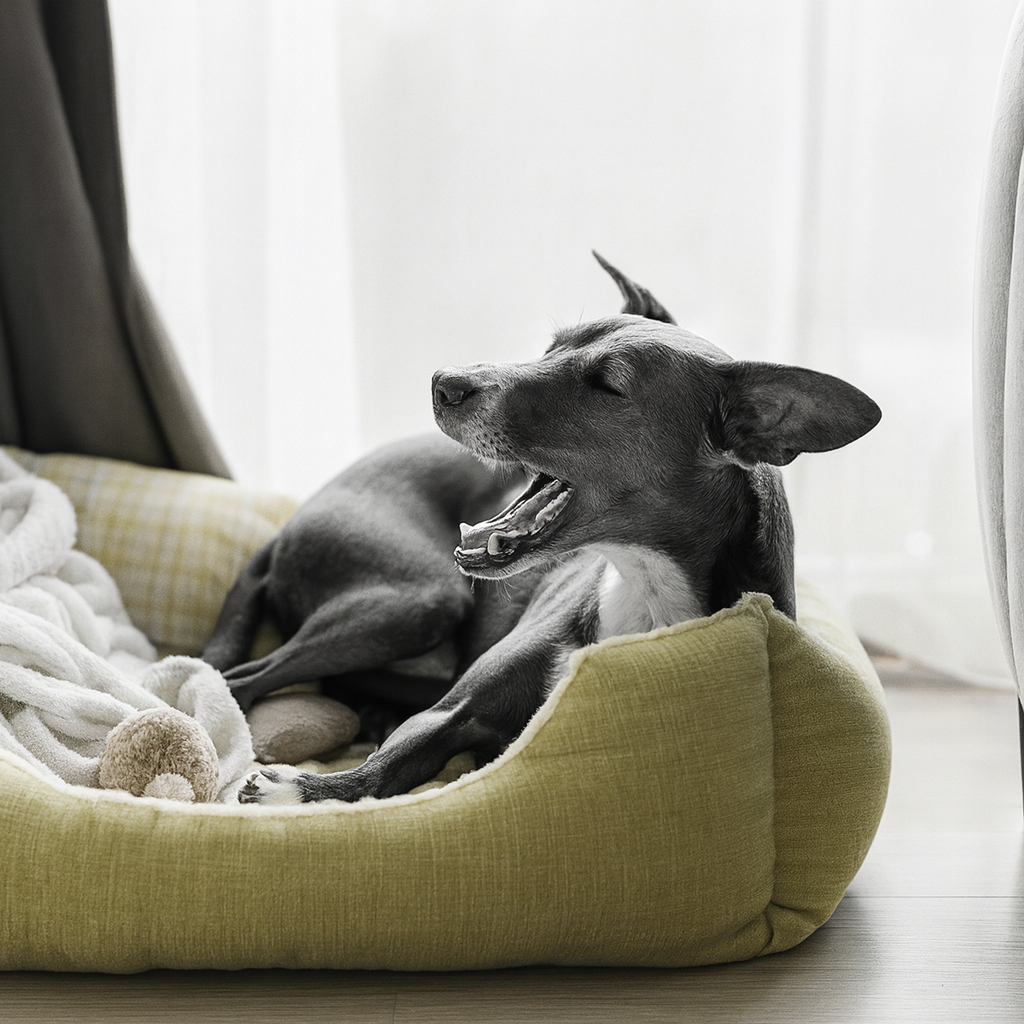
Here is a quick snapshot:
- More likely normal: Mild panting after a hot day, settles within minutes, dog relaxes.
- More concerning: Sudden change, very fast or loud panting, dog cannot rest.
- Emergency: Pale, blue, or bright red gums, collapse, severe weakness, or open-mouth breathing.
When in doubt, treat new or intense nighttime panting as something worth a checkup.
4 Common Reasons Dogs Pant At Night And What Each One Looks Like
Reason 1: Your Dog Is Too Warm And Panting To Cool Down
Panting is your dog’s built-in fan. When the room is warm or stuffy, your dog may pant to cool the body, especially if they have a thick coat.
Signs of heat discomfort at night include:
- Warm bedroom or closed windows with little airflow
- Your dog sleeping near heat vents, radiators, or under heavy blankets
- Tongue out, steady panting, but still alert, responsive, and interested in you
Flat-faced breeds like pugs, bulldogs, and shih tzus, along with overweight dogs, puppies, and seniors, have a harder time cooling down. They can overheat faster.
Simple checks you can do:
- Feel your dog’s ears and belly; they should be warm, not burning hot
- Check the room temperature and humidity
- See if panting eases when you move your dog to a cooler room or near a fan (not aimed straight at the face)
Watch for heatstroke signs, such as bright red or very pale gums, vomiting, wobbling, or collapse. Those mean your dog needs emergency care right away.
Reason 2: Stress, Nighttime Anxiety, Or Fear Triggers Heavy Panting
For many dogs, night is not peaceful. Storms, fireworks, strange outdoor noises, or being alone in another room can all trigger anxiety. Even subtle changes, like a new baby, house guests, or moving to a new home, can make a dog feel on edge after dark.
Anxious panting often comes with:
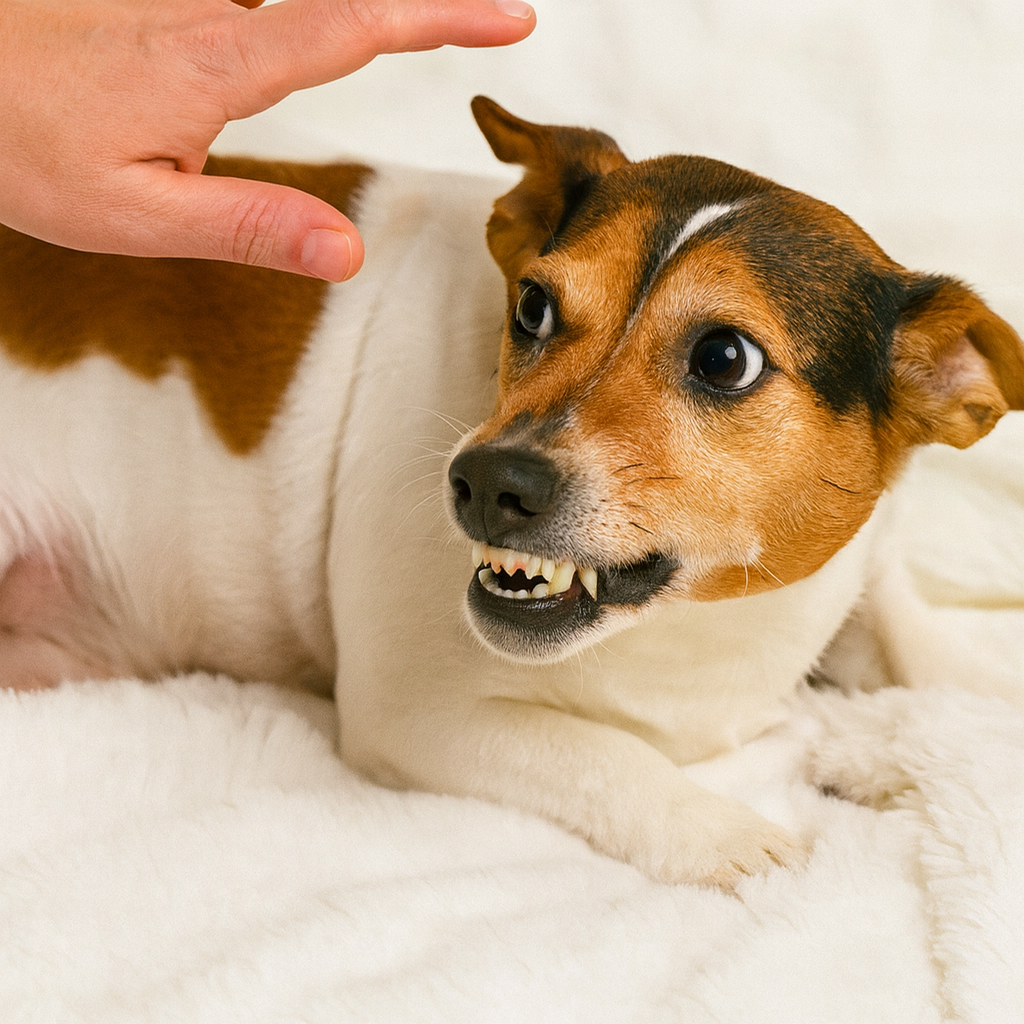
- Wide eyes or “whale eye” (you see the whites)
- Pacing, circling, or standing and staring
- Whining, barking, or clinging to you
- Lip licking, yawning, or shaking off when they are not wet
Older dogs can also develop nighttime confusion, sometimes called dog dementia. They may wander, get stuck in corners, and pant because their sleep-wake cycle is mixed up.
Panting from anxiety usually eases when your dog feels safer. Being in your bedroom, turning on a small light, or adding gentle background sound often helps. For more insight into how anxiety affects breathing, you may find this article on dog panting from anxiety and emotions helpful.
If your dog seems frightened more nights than not, talk with your vet about behavior support and safe anxiety treatments.
Reason 3: Pain Or Discomfort That Feels Worse At Night
Pain is a very common, often missed cause of nighttime panting. During the day, your dog might mask discomfort because they are busy or distracted. At night, when the house is quiet, aches and cramps feel stronger.
Common sources of pain include arthritis, sore joints, back pain, tummy upset, injuries, or recent surgery. Larger and older dogs are especially prone to joint pain.
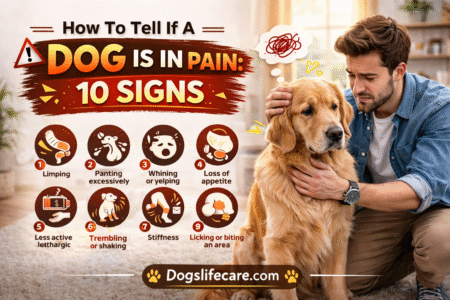
Signs that panting may be linked to pain:
- Stiffness getting up or lying down
- Limping or avoiding stairs or jumping on the couch
- Flinching, yelping, or moving away when you touch certain spots
- Changing sleep positions a lot or avoiding their usual curled-up pose
- Groaning, whining, or grunting when they shift
Notice patterns. Does your dog pant more at night after an active day, or when the weather is cold and damp? That can point to joint discomfort.
Do not give human pain medication unless your vet has said it is safe for your dog. Many common human drugs are toxic to dogs. Your vet can suggest safe pain control and may recommend joint support, weight loss, or physical therapy.
Reason 4: Hidden Medical Problems Affecting Heart, Lungs, Or Hormones
Sometimes nighttime panting is a sign of a deeper medical problem. Heart disease, lung disease, and hormone issues like Cushing’s disease (too much stress hormone) can all change how your dog breathes, especially when they lie down.
Watch for:
- Hacking cough, gagging, or noisy breathing
- Tiring faster on walks, slowing down, or stopping to rest
- Swollen or pot-bellied abdomen
- Drinking and peeing a lot more, always hungry, or gaining weight while losing muscle
Dogs with heart or lung disease may pant more when they lie flat because it is harder to move air or pump blood in that position. Hormone problems can change metabolism and make dogs pant more often, day and night.
Only a vet exam can confirm these issues. Your vet may suggest blood tests, x-rays, or an ultrasound. The article on when panting is abnormal from the Texas Veterinary Medical Foundation explains how panting can signal deeper health problems.
If your dog’s panting is new, gets worse over days or weeks, or comes with weight loss, fainting, blue or gray gums, or big changes in appetite or thirst, schedule a vet visit soon.
Vet-Approved Calming Tips To Help A Dog That Pants At Night
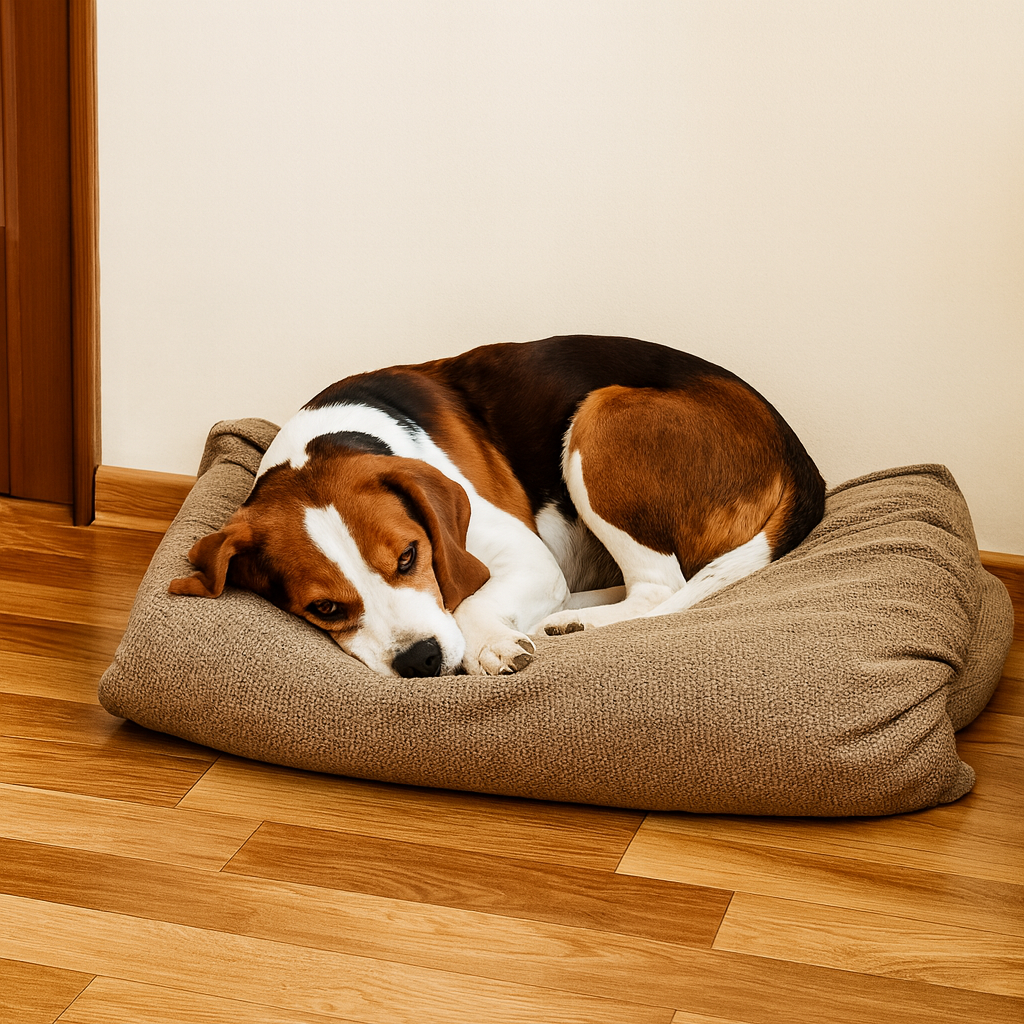
Make Your Dog’s Sleeping Area Cool, Safe, And Comfortable
Start with the basics: temperature, comfort, and a sense of safety.
Keep the room a bit cooler at night. Use a fan or air conditioner near your dog, but not blowing straight into their face. Offer a raised or cooling bed, and avoid piling heavy blankets on top.
Make sure there is fresh water within easy reach. Give each dog a calm, low-traffic sleep spot away from loud TVs and slamming doors. Many dogs rest better when they sleep in the same place every night.
For flat-faced or long-haired dogs, ask your groomer about trims that reduce bulk without shaving double coats too short. Heat-sensitive dogs, such as French Bulldogs, require extra care during sleep, so it’s helpful to understand how long a French Bulldog is pregnant and their care timeline to ensure they remain comfortable and safe in every stage of life. Dogs with special needs or breed-specific traits should not sleep in very warm rooms, such as small spaces with closed windows or near heaters.
Use Calm Routines, Gentle Reassurance, And Daytime Exercise
Dogs relax when they can predict what comes next. A simple, steady bedtime routine helps their body and brain shift into rest mode.
Try a pattern like: last potty break, a short walk or calm sniff around the yard, a few minutes of gentle petting or massage, dim lights, then a clear cue such as “bedtime.” Keep late-night play quiet and short.
Good daytime exercise and mental games, like training sessions or puzzle feeders, help your dog feel ready to sleep at night. Avoid wild fetch or rough play right before bed.
Your presence matters. A calm voice, slow breathing, and soft touch can signal safety to a nervous dog. Many vets also support tools like white noise, snug but safe anxiety wraps, pheromone diffusers, and simple puzzle toys. For more ideas, you can review this guide on nighttime anxiety in pets and comfort tips.
When To Call The Vet And How They Can Help Stop Night Panting
Some signs mean your dog should see a vet soon or go to emergency care.
Call a vet right away if you see:
- Very fast panting at rest
- Pale, blue, or bright red gums
- Coughing, collapse, or severe weakness
- Bloated belly, repeated vomiting, or bloody diarrhea
- Panting plus sharp increase in thirst, peeing, or weight changes
Your vet will listen to the heart and lungs, check gum color, feel the abdomen, and review your dog’s history. They may suggest blood tests, x-rays, heart scans, or medications for pain, heart disease, hormone problems, or stronger anxiety support.
Record a short video when the panting happens. Show where your dog is, how they move, and how long it lasts. This can be very helpful for your vet.
Early care often means your dog feels better faster and gets back to peaceful sleep sooner. If you are unsure, a phone call or visit can give you clear next steps.
Helping Your Dog Sleep Easier Tonight
Most dogs pant at night for one of four main reasons: they are too warm, anxious, in pain, or dealing with a medical problem that affects breathing or hormones. The good news is that many cases of nighttime panting improve with a cooler sleep area, calmer routines, and timely vet care. For small dog owners, understanding your pet’s unique traits can also help manage nighttime stress and comfort, especially if you have a tiny dog with a big personality, which may influence how they cope with temperature, anxiety, or pain.
Watch for patterns in your dog’s panting, trust your instincts if something feels off, and speak with your vet rather than guessing or hoping it will go away. You know your dog better than anyone.
With a bit of detective work and the right support, you can help your dog rest more comfortably. Better sleep for them often means better sleep for you, and it deepens the quiet bond you share each night.
Conclusion:
Nighttime panting in dogs can have several causes, from normal cooling and mild anxiety to pain or underlying medical conditions. By observing your dog’s behavior, providing a comfortable and cool sleeping environment, maintaining a calm bedtime routine, and seeking veterinary care when needed, you can help your dog rest more peacefully and ensure their health and well-being. Paying attention early often leads to quicker relief and a stronger bond between you and your pet.
FAQs:
What is normal nighttime panting in dogs?
Normal nighttime panting is usually mild and occurs after a warm day, exercise, or excitement. Your dog should settle within minutes and appear relaxed, showing no signs of stress, pain, or illness.
Why does my dog pant more in a warm room?
Dogs pant to cool themselves since they do not sweat like humans. A warm room, heavy blankets, or lack of airflow can make your dog pant to release heat and stay comfortable.
Can anxiety cause my dog to pant at night?
Yes, anxiety or stress, triggered by storms, fireworks, new environments, or separation, can cause panting, pacing, whining, or restlessness, especially at night.
How can I tell if panting is due to pain?
Panting linked to pain may appear with stiffness, limping, groaning, changing sleep positions, or avoiding usual resting spots. Nighttime quiet often makes aches more noticeable.
Are some breeds more prone to nighttime panting?
Flat-faced breeds like pugs, bulldogs, shih tzus, as well as overweight, older dogs, and puppies, are more sensitive to heat and may pant more to regulate their body temperature.
Could panting indicate a serious health problem?
Yes, heavy or unusual panting may signal heart, lung, or hormone-related issues. Signs like persistent coughing, collapse, abnormal gum color, or changes in appetite require immediate veterinary care.
How can I help my dog settle at night?
Providing a cool, comfortable sleeping area, fresh water, calm routines, and gentle reassurance can help dogs feel safe and reduce nighttime panting.
Should I record my dog’s panting for the vet?
Yes, short videos showing the location, behavior, and duration of panting help your vet assess the situation more accurately and suggest the right treatment.
Does exercise affect nighttime panting?
Yes, good daytime exercise and mental stimulation can help dogs rest better at night. However, avoid vigorous play immediately before bedtime, as it can trigger more panting.
When should I take my dog to the vet for panting?
Seek veterinary care if panting is sudden, extreme, or accompanied by pale, blue, or bright red gums, collapse, vomiting, bloating, or major changes in appetite, thirst, or weight.
https://enkling.com/read-blog/80980











Leave a Reply