
As someone who’s shared life with dogs for over 15 years from energetic puppies to wise senior companions. I can tell you one thing with confidence: training isn’t about control, it’s about communication. The better your dog understands you, the safer, calmer, and happier your daily life becomes.
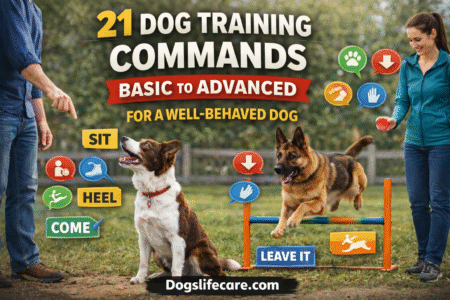
In this guide, I’ll walk you through 21 essential dog training commands, starting from the basics and progressing to advanced obedience skills. Whether you’re raising your first puppy or polishing your adult dog’s manners, these commands will help you build a well-behaved, confident, and trustworthy companion.
Let’s get started 🐾
- Why Teaching Commands Matters (From a Real Dog Owner’s Perspective)
- How to Train Successfully (Before We Start)
- 🐶 BASIC DOG COMMANDS (Foundation Skills)
- 3. Come (Recall)
- 🐕 INTERMEDIATE DOG COMMANDS (Real-Life Manners)
- 🐾 ADVANCED DOG COMMANDS (Next-Level Control & Trust)
- How Long Does It Take to Teach These Commands?
- Common Training Mistakes I See Dog Owners Make
- Final Thoughts From a Long-Time Dog Owner
Why Teaching Commands Matters (From a Real Dog Owner’s Perspective)
When I trained my first dog, I thought commands were just for obedience competitions. I quickly learned they’re actually about:
- Keeping your dog safe in real-life situations
- Building trust and communication
- Reducing unwanted behaviors like jumping, pulling, and barking
- Creating a calm household
A trained dog isn’t a robot they’re relaxed because they understand what’s expected of them.
How to Train Successfully (Before We Start)
Here’s what I’ve learned after training multiple dogs:
- Use positive reinforcement – treats, praise, toys
- Keep sessions short – 5–10 minutes works best
- Be consistent – same word, same tone, same gesture
- Practice daily – small efforts = big results
- End on success – always finish with something your dog does well
Now let’s move into the commands from beginner to advanced.
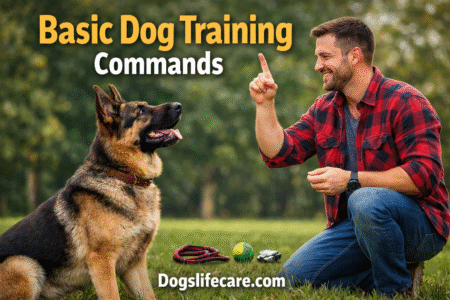
🐶 BASIC DOG COMMANDS (Foundation Skills)
These are the first commands every dog should learn. Master these, and everything else becomes easier.
1. Sit
Why it matters:
This is the foundation of calm behavior greeting guests, waiting for food, or crossing streets.
How I teach it:
Hold a treat over your dog’s nose and slowly move it back. As their head follows, their bottom naturally drops. Say “Sit,” reward immediately.
💡 Real-life tip: I use “Sit” before opening doors it prevents bolting.
2. Stay
Why it matters:
Keeps your dog safe and teaches self-control.
How I teach it:
Ask your dog to sit, show your palm, say “Stay,” step back one pace, return, reward. Slowly increase distance and time.
💡 Owner tip: Never call your dog out of a stay return to them instead.
3. Come (Recall)
Why it matters:
This is your dog’s most important safety command.
How I teach it:
Start indoors. Crouch, open your arms, say “Come!” in a happy tone. Reward like crazy when they reach you.
💡 Owner tip: Never punish your dog after they come even if they were naughty before.
4. Down
Why it matters:
Helps calm excited dogs and promotes relaxation.
How I teach it:
From sit, lower a treat to the floor and slowly pull it forward. As your dog lies down, say “Down” and reward.
💡 Owner tip: I use this when guests arrive it’s better than jumping.
5. Leave It
Why it matters:
Prevents your dog from picking up dangerous food or objects.
How I teach it:
Hold a treat in your closed fist. Let your dog sniff. When they stop trying, say “Leave it,” then reward with a different treat.
💡 Owner tip: This command alone has saved my dogs from eating harmful things outdoors.
6. Drop It
Why it matters:
Gets your dog to release toys or unsafe items from their mouth.
How I teach it:
Offer a toy, then present a treat and say “Drop it.” When they release, reward immediately.
💡 Owner tip: Never chase — that turns it into a game.
7. Heel
Why it matters:
Teaches your dog to walk politely beside you instead of pulling.
How I teach it:
Keep treats at your side and reward your dog for walking next to your leg calmly.
💡 Owner tip: I don’t expect perfection I just reward loose leash walking.
8. Watch Me (Focus)
Why it matters:
Gets your dog’s attention during distractions.
How I teach it:
Hold a treat near your eyes and say “Watch me.” Reward when your dog makes eye contact.
💡 Owner tip: This command makes every other command easier.
🐕 INTERMEDIATE DOG COMMANDS (Real-Life Manners)
These commands improve everyday behavior and impulse control.
9. Wait
Why it matters:
Teaches patience — at doors, stairs, food bowls, or cars.
How I teach it:
Ask your dog to sit, say “Wait,” take one step away. Release with “Okay!”
💡 Owner tip: I use this before crossing streets it’s priceless.
10. Place (Go to Bed/Mat)
Why it matters:
Helps your dog settle instead of pacing or jumping on guests.
How I teach it:
Lead your dog to their bed, say “Place,” reward once all four paws are on it.
💡 Owner tip: This command saved my sanity during dinner time.
11. Off
Why it matters:
Stops jumping on people or furniture politely.
How I teach it:
When your dog jumps, calmly say “Off” and reward when paws touch the ground.
💡 Owner tip: Never push your dog away it often excites them more.
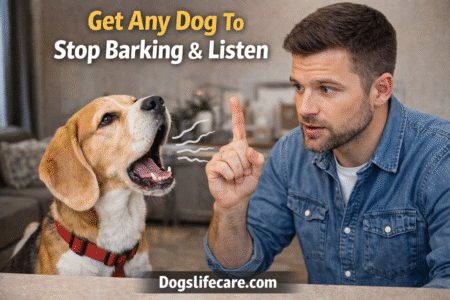
12. Quiet
Why it matters:
Controls excessive barking.
How I teach it:
Let your dog bark once or twice, then say “Quiet” and reward when they stop.
💡 Owner tip: Always reward silence not barking.
13. Touch (Hand Target)
Why it matters:
Improves focus, recall, and positioning.
How I teach it:
Hold out your palm and say “Touch.” Reward when their nose taps your hand.
💡 Owner tip: Great for nervous dogs and trick training.
14. Settle
Why it matters:
Teaches your dog to relax when overstimulated.
How I teach it:
Reward calm lying behavior while quietly saying “Settle.”
💡 Owner tip: This command works best when taught during calm moments.
🐾 ADVANCED DOG COMMANDS (Next-Level Control & Trust)
These commands aren’t just impressive they build reliability in real-world situations.
15. Stand
Why it matters:
Helpful for grooming, vet visits, and examinations.
How I teach it:
From sit or down, lure your dog forward into standing position and reward.
16. Backup
Why it matters:
Improves body awareness and control in tight spaces.
How I teach it:
Step toward your dog gently and reward when they move backward.
17. Emergency Stop (Stop / Freeze)
Why it matters:
Can literally save your dog’s life if they’re running toward danger.
How I teach it:
While your dog is walking toward you, say “Stop” and reward when they freeze.
💡 Owner tip: Practice this in safe environments first.
18. Go Find (Search Command)
Why it matters:
Stimulates your dog mentally and strengthens recall skills.
How I teach it:
Hide a treat or toy and say “Go find!” Reward success.
💡 Owner tip: This is fantastic for high-energy dogs.
19. Take It
Why it matters:
Teaches controlled grabbing — useful for toys, food, or service work.
How I teach it:
Offer an item and say “Take it.” Reward when your dog gently accepts it.
20. Hold
Why it matters:
Builds impulse control and advanced obedience.
How I teach it:
Ask your dog to take an object, say “Hold,” reward while they keep it in their mouth calmly.
21. Leave the Room / Go Out
Why it matters:
Teaches boundaries and calm movement away from stimulation.
How I teach it:
Guide your dog out of the room and reward once they exit calmly.
💡 Owner tip: This works beautifully for door manners and guests.
How Long Does It Take to Teach These Commands?
From my experience:
- Basic commands: 1–2 weeks each
- Intermediate commands: 2–4 weeks
- Advanced commands: Ongoing refinement
Every dog learns at their own pace. Consistency beats speed every time.
Common Training Mistakes I See Dog Owners Make
Avoid these they slow progress fast:
❌ Repeating commands multiple times
❌ Training when frustrated
❌ Skipping rewards too early
❌ Being inconsistent with rules
❌ Expecting perfection too soon
✔ Instead: reward effort, stay patient, and celebrate small wins.
Final Thoughts From a Long-Time Dog Owner
Training your dog isn’t about creating obedience it’s about creating understanding.
Over the years, I’ve learned that dogs genuinely want to do the right thing. They just need us to show them how kindly, clearly, and consistently.
If you teach even half of these 21 commands, you’ll notice:
- Better behavior
- Stronger trust
- Less stress
- More freedom for your dog
And honestly? A trained dog is a joy to live with calm indoors, reliable outdoors, and confident everywhere.












Leave a Reply