


Want to learn some fun facts about Pomeranians? From their royal connections to their surprisingly big personalities, Poms are fascinating little dogs. This article explores 15 top Pomeranian facts, covering their history, health, behavior, and more. You’ll discover why they make great companions, what their grooming needs are, and even how long they typically live. Plus, we’ll answer frequently asked questions about Pomeranians, including whether they’re good with cats and how easy they are to train. Read on to uncover the many reasons why Pomeranians are such a beloved breed.
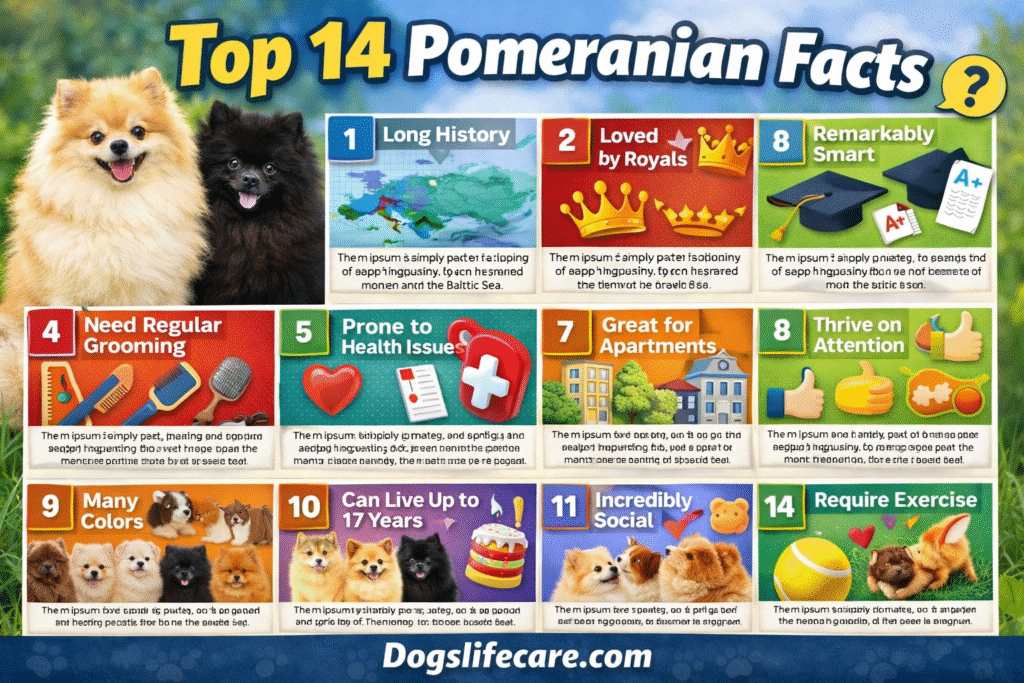
- Top 14 Pomeranian Facts
- 1. Pomeranians Have a Long History
- 2. They’re Loved by Royals
- 3. Poms Are Remarkably Smart
- 4. Their Coats Require Regular Maintenance
- 5. Pomeranians Are Prone to Certain Health Issues
- 6. They Make Great Watchdogs
- 7. They’re Great for Apartment Living
- 8. Poms Love to Attention
- 9. Pomeranians Come in Many Colors
- 10. They Can Live Up to 17 Years
- 11. Pomeranians Are Incredibly Social
- 12. Their Bark Is Far Bigger Than Their Bite!
- 13. Pomeranians Love Cuddling Up with Their Owners
- 14. They Require Regular Exercise
- 15. Pomeranians Have Big Personalities
- Adorable Bonus Facts About Pomeranians
- Pomeranian FAQs
- Q: Are Pomeranians good with cats?
- Q: How often do I need to groom my Pomeranian?
- Q: Are Pomeranians easy to train?
- Q: Are Pomeranians hypoallergenic?
- Q: How long do Pomeranians live?
- Conclusion
Top 14 Pomeranian Facts
1. Pomeranians Have a Long History
The Pomeranian dog breed’s history can be traced back to the province of Pomerania, located in Central Europe along the Baltic Sea (now part of Poland and Germany). They are descendants of larger Spitz-type dogs, known for their thick double coats and wolf-like appearance. These larger dogs were originally used for herding and sled-pulling. Through selective breeding, the Pomeranian was developed into the smaller, toy dog breed we know and love today.
2. They’re Loved by Royals
Pomeranians gained popularity thanks to royalty, most notably Queen Victoria of England. She owned several Poms and even bred them, which significantly boosted the breed’s appeal and helped standardize their size. Other royals, including Queen Charlotte and Josephine Bonaparte, also owned Pomeranians, further solidifying their status as a fashionable companion. This royal association contributed to their image as pampered and beloved pets.
3. Poms Are Remarkably Smart
Despite their small size, Pomeranians are remarkably smart dogs. They are intelligent and eager to please, making them relatively easy to train. Poms excel in obedience training and can learn a variety of tricks. Their intelligence, combined with their playful nature, makes them a joy to interact with and train. This intelligence also means they need mental stimulation to prevent boredom.
4. Their Coats Require Regular Maintenance
Pomeranians have a thick, double coat that is their trademark. This beautiful coat requires regular maintenance to prevent matting and tangles. Daily brushing is recommended to keep their fur looking its best. Professional grooming every few months can also help maintain their coat’s health and appearance. Regular grooming also helps minimize shedding.
5. Pomeranians Are Prone to Certain Health Issues
Like all dog breeds, Pomeranians are prone to certain health issues. Some common concerns include patellar luxation (dislocated kneecap), tracheal collapse (weakening of the trachea), and hypoglycemia (low blood sugar). Responsible breeders screen their dogs for these conditions to minimize the risk of passing them on to puppies. Regular veterinary checkups are crucial for early detection and management of any health problems.
6. They Make Great Watchdogs
Pomeranians make great watchdogs due to their alert and vocal nature. They are quick to bark at strangers or unusual sounds, alerting their owners to potential threats. While they are small, their bark is surprisingly loud, making them effective at deterring intruders. However, it’s important to train them to avoid excessive barking.
7. They’re Great for Apartment Living
Pomeranians are great for apartment living because of their small size and moderate exercise needs. They don’t require a large yard and can get sufficient exercise through indoor play and short walks. Their adaptability to smaller spaces makes them a popular choice for city dwellers. However, they still need plenty of attention and mental stimulation to thrive in an apartment environment.
8. Poms Love to Attention
Pomeranians love to attention and thrive on human interaction. They enjoy being the center of attention and can become easily bored or anxious if left alone for long periods. Poms are affectionate and enjoy cuddling with their owners. This makes them ideal companions for people who can provide them with plenty of love and attention.
9. Pomeranians Come in Many Colors
Pomeranians come in many colors, including red, orange, cream, sable, black, brown, and white. The American Kennel Club (AKC) recognizes a wide variety of colors and patterns within the Pomeranian Breed Standard. This diverse range of colors adds to their appeal and allows potential owners to choose a Pom that matches their preferences. A popular color is the Black Pomeranian.
10. They Can Live Up to 17 Years
Pomeranians can live up to 17 years with proper care and a healthy lifestyle. Their lifespan is relatively long compared to some other dog breeds. Factors that contribute to their longevity include good nutrition, regular exercise, and preventative veterinary care. Providing a loving and stimulating environment can also help extend their lifespan.
11. Pomeranians Are Incredibly Social
Pomeranians are incredibly social dogs, but early socialization is key. Exposing them to different people, places, and situations from a young age helps them develop into well-adjusted adults. Socialization can help prevent fearfulness and aggression towards strangers. Puppy classes and playdates are great ways to socialize your Pomeranian.
12. Their Bark Is Far Bigger Than Their Bite!
Pomeranians are known for their loud bark, which is often much bigger than their bite. They tend to bark at everything, making them good watchdogs but also potentially noisy neighbors. Training and consistent reinforcement can help manage their barking habits. It’s important to address excessive barking early to prevent it from becoming a nuisance.
13. Pomeranians Love Cuddling Up with Their Owners
Pomeranians love cuddling up with their owners and are often described as “velcro dogs.” They enjoy being close to their favorite people and will often follow them around the house. Their affectionate nature makes them wonderful companions for people of all ages. Cuddling and physical affection help strengthen the bond between Poms and their owners.
14. They Require Regular Exercise
Pomeranians require regular exercise to stay healthy and happy. While they are small, they still need daily physical activity. Short walks, playtime in the yard, and interactive games can help them burn energy and prevent boredom. Exercise also helps maintain their muscle tone and overall fitness.
15. Pomeranians Have Big Personalities
Pomeranians have big personalities packed into their small bodies. They are often described as confident, playful, and sassy. Their unique personalities make them entertaining and endearing companions. Despite their small size, they are full of life and bring joy to their owners’ lives. Small Dog Syndrome is a common term to describe the behavior of small dogs that are not well-trained and believe they are in charge.
Adorable Bonus Facts About Pomeranians
- Pomeranians were once much larger, weighing up to 30 pounds.
- They are part of the Spitz family, which includes breeds like the Siberian Husky and Alaskan Malamute.
- Pomeranians are known for their “lion’s mane” of fur around their neck.
- They are popular in dog shows and excel in agility competitions.
- Pomeranians can be prone to separation anxiety if left alone for too long.
Pomeranian FAQs
Q: Are Pomeranians good with cats?
Pomeranians can be good with cats, especially if they are raised together from a young age. Early socialization is key to ensuring they get along well. However, some Poms may have a strong prey drive and may chase cats. Careful supervision and training are necessary to promote a harmonious relationship.
Q: How often do I need to groom my Pomeranian?
You need to groom your Pomeranian regularly, ideally daily, to prevent matting and tangles. Brushing several times a week is essential to maintain their coat’s health and appearance. Professional grooming every few months can also help keep their fur in top condition. Regular grooming also helps minimize shedding.
Q: Are Pomeranians easy to train?
Pomeranians are relatively easy to train due to their intelligence and eagerness to please. Positive reinforcement techniques, such as treats and praise, work well with this breed. Consistency and patience are important for successful training. Addressing any behavioral issues early on can prevent them from becoming ingrained habits.
Q: Are Pomeranians hypoallergenic?
Pomeranians are not hypoallergenic. While no dog is completely hypoallergenic, some breeds produce less dander than others. Pomeranians shed moderately, which can trigger allergies in sensitive individuals. Regular grooming can help minimize shedding and reduce allergen exposure.
Q: How long do Pomeranians live?
Pomeranians live between 12 and 16 years on average, with some living even longer with proper care. Their lifespan depends on factors such as genetics, diet, exercise, and veterinary care. Providing a healthy lifestyle and preventative care can help extend their lifespan.
Conclusion
From their royal history to their intelligent and social nature, Pomeranians are truly remarkable dogs. These fun Pomeranian facts highlight the many reasons why they make such beloved companions. Whether you’re considering getting a Pom or simply want to learn more about this fascinating breed, understanding their history, health needs, and personalities is essential. Their adaptability to apartment living, combined with their affectionate nature, makes them an ideal choice for many dog lovers.

















Leave a Reply