

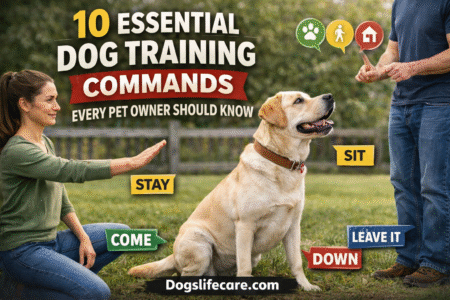
As someone who has shared life with dogs for over a decade from energetic puppies to wise senior companions. I can confidently say this: a well-trained dog is a happier dog. Training isn’t about control; it’s about communication, safety, trust, and building a bond that lasts a lifetime.
If you’re a new dog owner (or even an experienced one brushing up), mastering a few core commands will make everyday life easier walks become peaceful, guests feel welcome, and your dog feels confident knowing what’s expected.
In this guide, I’ll walk you through the 10 essential dog training commands every pet owner should know, along with practical tips I’ve personally used that actually work.
- Why Teaching Basic Commands Is So Important
- 1. Sit — The Foundation of All Dog Training
- 2. Stay — Teaching Self-Control and Safety
- 3. Come — The Most Important Recall Command
- 4. Down — Calming Excitement and Encouraging Relaxation
- 5. Leave It — Preventing Dangerous Situations
- 6. Drop It — For Safe Toy and Object Release
- 7. Heel — For Calm, Enjoyable Walks
- 8. Wait — Teaching Patience and Manners
- 9. Place — Giving Your Dog a Calm, Safe Spot
- 10. No / Off — Setting Clear Boundaries
- Best Practices for Teaching Dog Commands Successfully
- Common Dog Training Mistakes to Avoid
- Final Thoughts: Training Builds More Than Obedience
Why Teaching Basic Commands Is So Important
Before jumping into the commands, let me share something I learned early on:
Dogs crave structure. Clear commands help them understand how to behave in human environments, reducing stress and unwanted behaviors like jumping, barking, or running off.
Proper training also:
- Improves your dog’s safety
- Strengthens your bond
- Builds confidence in both you and your pet
- Makes social outings far more enjoyable
Now, let’s get into the commands every dog should learn in the right order.
1. Sit — The Foundation of All Dog Training
Why it matters:
“Sit” is usually the first command I teach because it naturally calms dogs and sets the tone for all future training.
How to teach it:
- Hold a treat near your dog’s nose.
- Slowly lift it upward their head follows, and their bottom drops.
- The moment they sit, say “Sit,” reward, and praise.
Pro tip from experience:
Use “Sit” before meals, walks, or greeting guests. It teaches patience and impulse control two life-changing skills for dogs.
2. Stay — Teaching Self-Control and Safety
Why it matters:
This command keeps your dog safe in risky situations like when the door is open or a bike passes by.
How to teach it:
- Ask your dog to sit.
- Hold your palm out and say “Stay.”
- Take one step back, then return and reward.
- Slowly increase distance and time.
Real-life use:
I use “Stay” before crossing roads or opening gates it’s one of the most valuable safety commands.
3. Come — The Most Important Recall Command
Why it matters:
If there’s one command every dog absolutely must know, it’s “Come.” It can prevent accidents and even save your dog’s life.
How to teach it:
- Use a happy tone and say your dog’s name followed by “Come!”
- Reward generously when they reach you.
- Practice in safe, low-distraction areas first.
Trainer’s tip:
Never use “Come” to punish your dog. You want them to associate it with good things treats, praise, and affection.
4. Down — Calming Excitement and Encouraging Relaxation
Why it matters:
“Down” helps settle overexcited dogs and is great for public settings or guests at home.
How to teach it:
- Start from a sitting position.
- Move a treat from your dog’s nose down toward the floor.
- As they lie down, say “Down,” reward, and praise.
Experience insight:
I use “Down” during vet visits, café outings, and when my dog needs to relax after playtime.
5. Leave It — Preventing Dangerous Situations
Why it matters:
Dogs explore the world with their mouths and that can lead to trouble. “Leave it” stops them from picking up harmful objects.
How to teach it:
- Hold a treat in a closed fist.
- When your dog stops trying to get it, say “Leave it,” then reward with a different treat.
- Gradually practice with objects on the ground.
Why I love this command:
It’s saved my dogs from eating unsafe food, trash, and even sharp objects during walks.
6. Drop It — For Safe Toy and Object Release
Why it matters:
Whether your dog grabs your shoe or a stick at the park, “Drop it” prevents resource guarding and keeps everyone safe.
How to teach it:
- Offer your dog a toy.
- Present a treat and say “Drop it.”
- When they release, reward and return the toy.
Owner advice:
Never chase your dog for objects that turns it into a game. “Drop it” teaches calm cooperation instead.
7. Heel — For Calm, Enjoyable Walks
Why it matters:
Pulling on the leash is one of the most common dog owner frustrations. “Heel” teaches your dog to walk politely beside you.
How to teach it:
- Hold treats near your leg and reward your dog for walking beside you.
- Say “Heel” when they stay in position.
- Practice in short sessions.
Real-world benefit:
Walks become relaxing instead of stressful and your dog gets better exercise without pulling.
8. Wait — Teaching Patience and Manners
Why it matters:
“Wait” is slightly different from “Stay.” It teaches your dog to pause briefly perfect for doors, food bowls, and car exits.
How to teach it:
- Ask your dog to sit.
- Say “Wait” before placing food or opening a door.
- Release with “Okay” and reward.
From my experience:
This command dramatically reduces door-dashing and food snatching.
9. Place — Giving Your Dog a Calm, Safe Spot
Why it matters:
“Place” sends your dog to a specific bed, mat, or area especially useful when guests arrive or during meals.
How to teach it:
- Lead your dog to their bed or mat.
- Say “Place” and reward when they stay there.
- Gradually increase duration.
Why seasoned owners love this:
It gives your dog structure and helps manage excitement in busy households.
10. No / Off — Setting Clear Boundaries
Why it matters:
While positive reinforcement is best, dogs still need clear boundaries. “No” or “Off” teaches them what behavior isn’t acceptable like jumping on people or furniture.
How to teach it:
- Calmly say “Off” when your dog jumps.
- Redirect them to a sit or down.
- Reward correct behavior immediately.
Trainer insight:
Never yell calm consistency works far better and strengthens trust.
Best Practices for Teaching Dog Commands Successfully
From years of training dogs of different breeds and personalities, here’s what truly works:
✔ Keep Training Sessions Short
5–10 minutes at a time prevents boredom and keeps learning fun.
✔ Use Positive Reinforcement
Treats, praise, toys, and affection build faster learning than punishment.
✔ Be Consistent
Use the same word, tone, and hand signal for each command.
✔ Practice in Real-Life Situations
Train indoors first, then slowly introduce distractions outdoors.
✔ Be Patient
Every dog learns at their own pace consistency beats speed.
Common Dog Training Mistakes to Avoid
Many new owners unknowingly slow progress by:
- Repeating commands without follow through
- Training when their dog is tired or overstimulated
- Inconsistency among family members
- Expecting instant results
Trust me progress comes with time, not pressure.
Final Thoughts: Training Builds More Than Obedience
Teaching your dog commands isn’t about creating a robot it’s about building communication, trust, and mutual respect. Every command you teach strengthens your bond and helps your dog feel secure in your world.
Start with the basics: Sit, Stay, Come, Down, Leave It, Drop It, Heel, Wait, Place, and Off. Master these, and you’ll have a well-behaved, confident companion for life.
As someone who’s trained many dogs over the years, I can honestly say there’s nothing more rewarding than seeing your dog look at you, waiting for guidance, and responding with confidence. That’s not just obedience. That’s partnership.
















Leave a Reply